Pastor Salary By Church Size - Where Do You Stand?

- Pastor salaries in 2026 vary widely based on church size, role, and location
- The median pastor salary in 2026 is approximately $59,000 per year
- According to Vanderblomen, it is appropriate to allocate 45–55% of your budget to compensation

Are you trying to determine how much to pay your pastor? Or are you a pastor wondering how your current compensation compares to others?
This article walks you through the average pastor salary in 2026, pastor salary by church size, and how to determine the best salary package for your pastor..
Pastor Salary in 2026
Pastor compensation varies widely based on church size, location, and role expectations.
What Is the Average Pastor Salary in 2026?
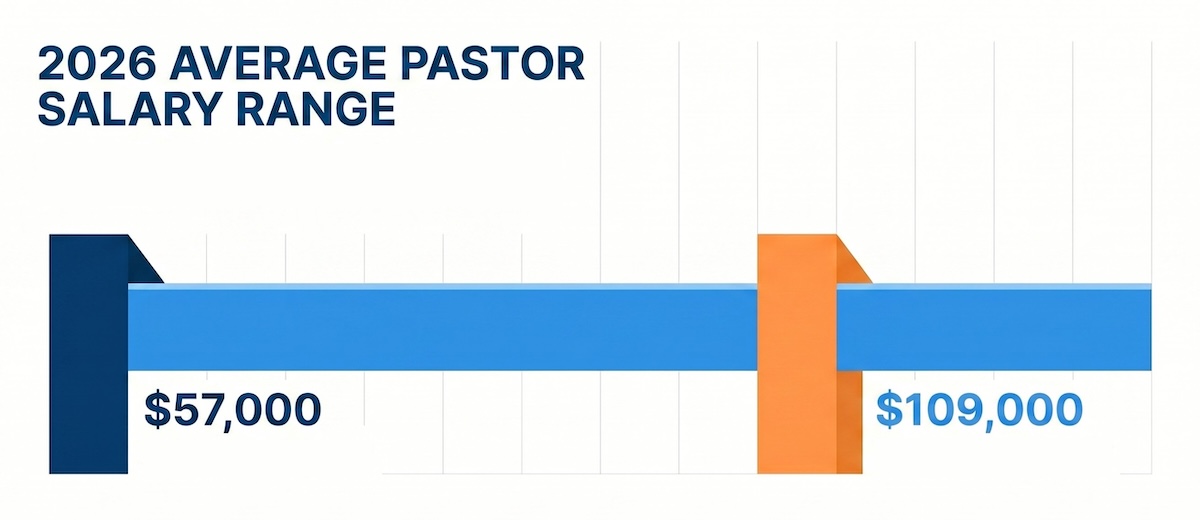
According to Salary.com, as of 2026, national compensation data shows that the average pastor's salary in the United States ranges between $57,000 and $109,000 annually, depending on how the role is defined and measured.
Broad studies that include senior pastors, lead pastors, and executive‑level ministry leaders tend to report higher averages, while surveys focused on local church pastors reflect more modest compensation figures.
What Is the Median Pastor Salary in 2026?
The median pastor salary in 2026 is approximately $59,000 per year (Salary.com). Median figures are often more helpful than averages because they reduce the influence of very large churches with unusually high compensation packages.
Pastors in the bottom range of compensation typically earn in the mid‑$30,000s, while the highest‑paid pastors (often serving large congregations or multi‑site churches) can earn well into six figures.
The State of Pastor Income in 2026
When compared to updated U.S. income brackets, many pastors fall within the lower‑middle to middle‑income ranges, particularly when serving small or mid‑sized churches with a single income household.
Logically, smaller churches tend to pay less than the median, and larger churches pay more. This reality reinforces the importance of intentional compensation planning for churches of all sizes. Where does your church stand?
Average Pastor Salary by Church Size
One of the strongest predictors of pastor compensation is weekly attendance. As churches grow, pastoral responsibilities expand, and compensation typically increases accordingly.
First, let's define church size:
- Small church: 500 regular attendees or fewer
- Mid-sized church: 501-1,200 regular attendees
- Large church: 1,201 and higher regular attendees
Average Pastor Salary for Small Churches
In 2026, small churches generally compensate pastors anywhere from $35,494-$67,221 (Salary.com). This wide range reflects the diversity of small churches, from volunteer‑led congregations to fully staffed churches nearing several hundred attendees.
Some small churches rely on bivocational pastors, while others prioritize pastoral compensation as their largest budget item.
Something to consider for pastors on the lower side of the average compensation is whether that pastor is full-time or part-time. Many small churches cannot financially support a full-time pastoral role, especially congregations with under 100 regular attendees. In these cases, pastors may work part-time hours or serve in a bivocational capacity, supplementing their income with outside employment.
However, compensation should still be evaluated in light of workload, expectations, and benefits such as housing allowances, health insurance, or retirement contributions, which may not be reflected in base salary alone.
Average Pastor Salary for Mid‑Sized Churches
Mid‑sized churches typically pay pastors between $75,624-$96,656 (Salary.com). At this level, pastors often manage staff, oversee multiple ministries, and lead strategic growth initiatives.
Average Pastor Salary for Large Churches
According to Reach Right, large churches in 2026 commonly offer senior pastor salaries ranging from $95,000 to over $120,485, often supplemented by housing allowances, retirement contributions, and additional benefits.
At this scale, pastors function similarly to executive leaders and are compensated accordingly.
How Much of a Church Budget Should Go Toward Pastor Salary?
According to Vanderblomen, a widely accepted benchmark in 2026 is to allocate 45–55% (up to 60% for smaller churches or staff-heavy models). This figure includes all salaries, housing allowances, payroll taxes, insurance, and benefits for pastors and other staff members (not just the lead pastor’s pay).
Church size and ministry structure play a major role in how this percentage looks in practice.
- Smaller congregations often spend a higher percentage on staff because fixed costs (such as facilities and utilities) consume less of the overall budget.
- Larger churches may fall closer to the lower end of the range due to economies of scale and a broader spread of expenses.
While these benchmarks provide helpful guidance, they should not replace thoughtful evaluation. Churches should regularly review compensation to ensure it reflects the local cost of living, staff responsibilities, and the long-term sustainability of the ministry.
How Are Pastor Salaries Determined?
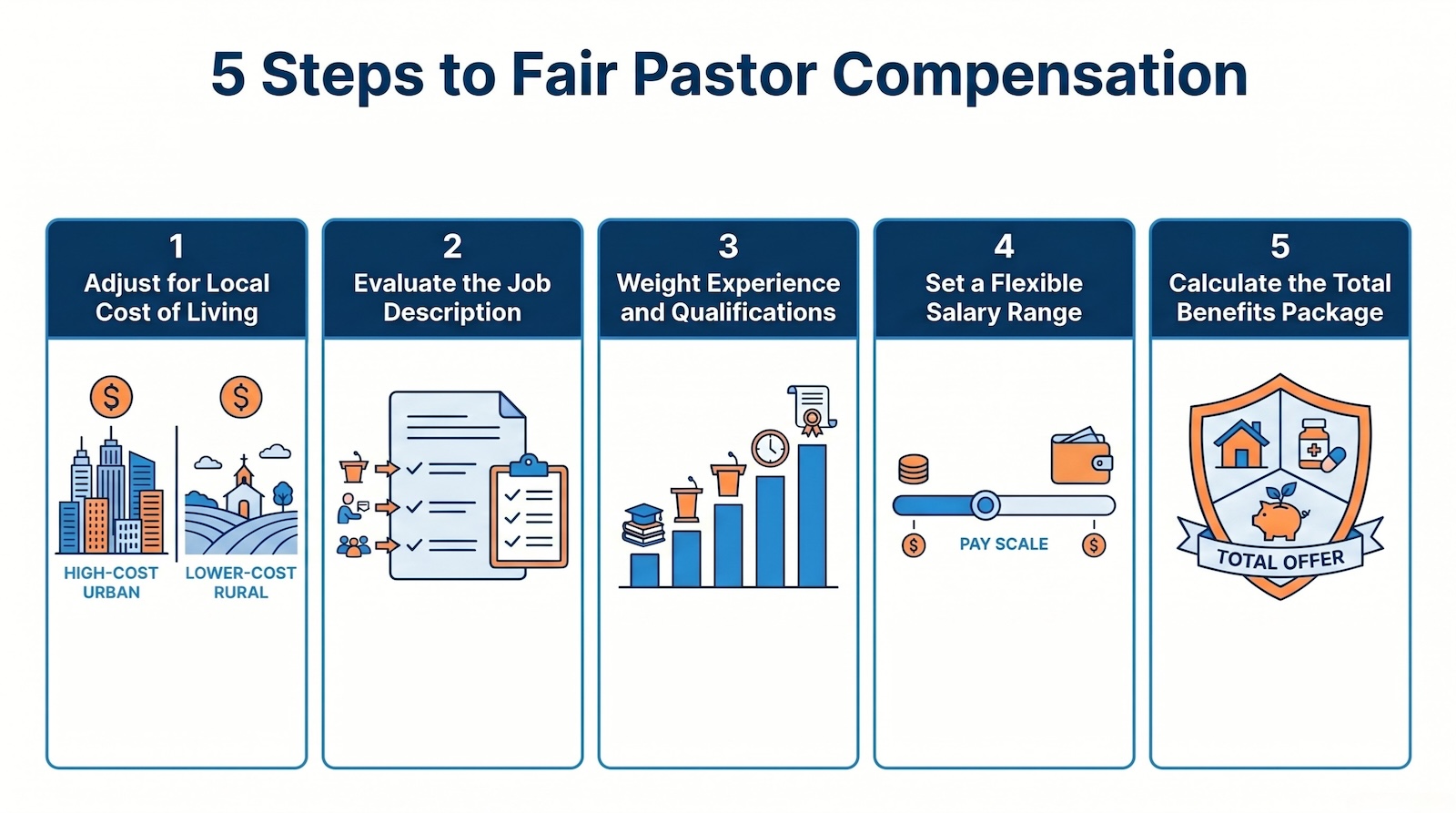
There is no single formula for determining a pastor’s salary. Churches should evaluate several key factors to ensure compensation is fair, realistic, and sustainable.
- Location and Cost of Living: Cost of living remains one of the most important considerations in 2026. Churches in urban or high‑cost regions should adjust salaries accordingly to support pastors and their families.
- Job Description and Responsibilities: Clear expectations help churches align compensation with workload. Expanding responsibilities without adjusting pay often leads to burnout or turnover.
- Experience and Qualifications: Education, leadership experience, and ministry tenure continue to influence salary expectations. Churches seeking seasoned leaders may need to budget more competitively.
- Salary Ranges and Flexibility: Establishing a salary range rather than a fixed number provides flexibility as church finances, attendance, and leadership needs change.
- Benefits and Allowances: In 2026, benefits such as health insurance, retirement contributions, housing allowances, sabbaticals, and continuing education are often just as important as base salary.
How Does Your Church Compare?
Does your church fairly compensate the pastor? Or is there room in the budget to improve in that area?
Use this post as a church compensation and salary guide to help you create a pastor salary that takes care of the shepherd of your flock.
Financial Disclaimer: This article is provided for informational purposes only and does not constitute professional accounting, tax, or financial advice. Church tax laws are complex and subject to change based on federal, state, and denominational regulations. ChurchTrac is a software provider, not a CPA firm. We strongly recommend consulting with a qualified tax professional or certified public accountant before making financial decisions or filing tax-related documents for your ministry.



FAQs: Pastor Salary
In 2026, the average pastor's salary typically ranges from $57,000-$109,000 annually, depending on church size, location, and scope of responsibility.
The median pastor's salary in 2026 falls around $59,000 per year. Compensation varies based on church size, whether the role oversees children, students, or adult education, and if the position is full-time or combined with other ministry responsibilities.
Pastor salaries differ based on church size, location, denomination, responsibilities, and whether the role is full‑time or bivocational.
Often no. Housing Allowances are typically provided in addition to base salary and can significantly affect total compensation.
Many churches review compensation annually to account for inflation, cost‑of‑living changes, and increased responsibilities.