The Perfect Church Plan Your Visit Page

- Your Plan Your Visit page often determines whether someone attends your church.
- A well-designed Plan Your Visit page does more than share information. It welcomes visitors, removes barriers, and invites people to take their next step with confidence.
Your Plan Your Visit page is more important than many churches realize.
In many ways, it serves as the digital front door to your church—and for many visitors, it’s the deciding factor in whether they attend on Sunday.
Before anyone steps inside your building, this page shapes expectations, answers questions, and helps reduce the uncertainty first-time visitors often feel.
First impressions matter, and a Plan Your Visit page sets the tone.
What Is a Church Plan Your Visit Page?
A Plan Your Visit page is designed specifically for visitors—not members.
It answers the question most people are asking: “If I show up this Sunday, what will happen?”
Instead of just sharing information, an effective Plan Your Visit page reduces uncertainty and helps people decide whether to attend.
Why Every Church Needs a Plan Your Visit Strategy
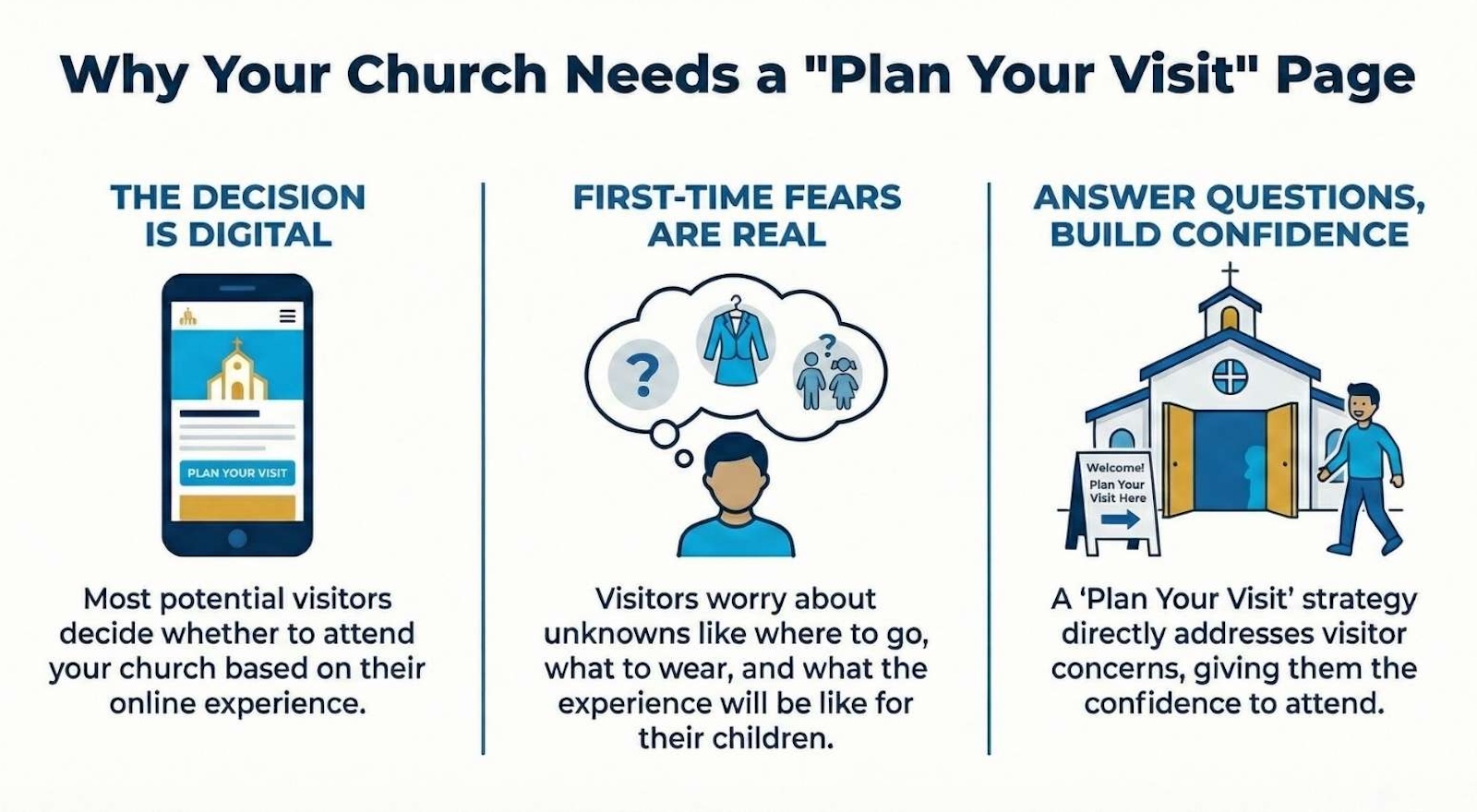
Most people decide whether to visit a church before Sunday—and that decision is usually made online.
Whether they find your church through Google or social media, your website often determines whether they take the next step.
People compare churches the same way they compare almost anything else. Even a healthy church can be overlooked if its website feels confusing or unwelcoming.
Your website sets expectations long before the sermon is preached.
First-time visitors often worry about where to go, what to wear, and what their children will experience.
A clear Plan Your Visit strategy addresses those concerns and gives people the confidence they need to attend.
What Visitors Want to Know Before They Visit Your Church
Most first-time visitors have the same questions.
Your Plan Your Visit page should answer them clearly and calmly—helping people feel prepared before they arrive.
The most effective pages include the following sections:
What Should I Expect on Sunday?
This section exists to reduce anxiety.
Describe the flow of your service in clear, simple language. Let visitors know what the service is like, how long it typically lasts, what people usually wear, and when they should arrive.
Avoid church jargon. Write as if someone with no church background is reading.
Where Do I Go When I Arrive?
This section removes the awkwardness of arriving for the first time.
Walk visitors through the experience step by step—from parking to finding a seat—using simple, reassuring directions.
What About Children’s Ministry?
Families want to know their children will be safe and cared for.
Use this section to explain your check-in process, safety practices, and the kind of environment children will experience.
Essential Elements of the Perfect Plan Your Visit Page
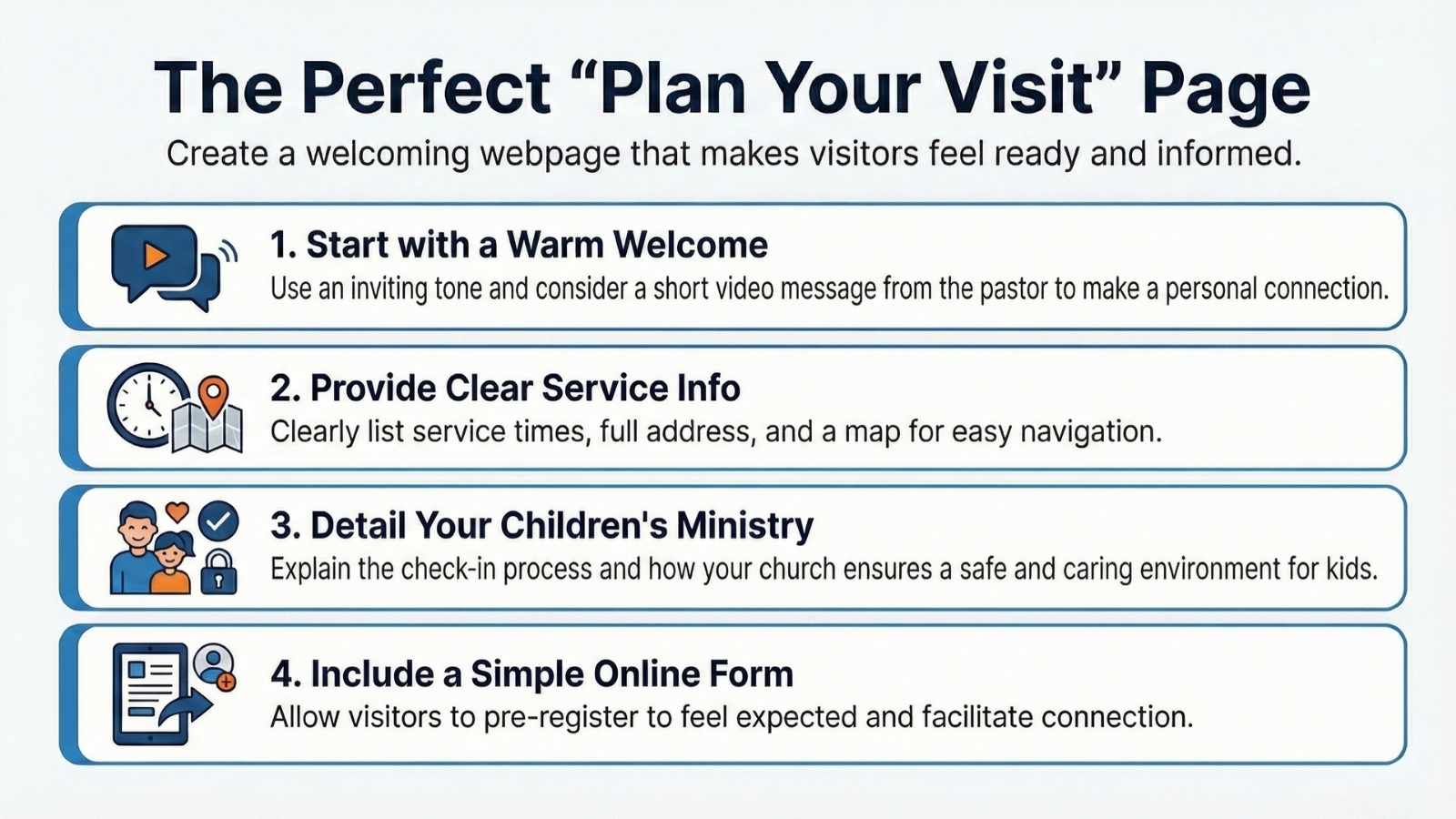
Your Plan Your Visit page should guide visitors step by step and help them feel welcomed and prepared.
1. A clear, welcoming message
Speak directly to visitors and set a warm tone. A short welcome video from your pastor can help visitors feel personally invited.
2. Service times and location
Clearly list service times, your address, and directions so visitors can plan with confidence.
3. Children’s ministry information
Explain what families can expect and how your church prioritizes safety and care.
4. A simple Plan Your Visit form
Give visitors the option to plan ahead and introduce themselves before attending.
How ChurchTrac Helps Churches Create Better Visitor Experiences
Welcoming visitors well requires the right tools.
With ChurchTrac, churches can create a clear, welcoming website with an effective Plan Your Visit page.
Online forms allow visitors to plan ahead, helping church leaders follow up personally and thoughtfully.
Make Visiting Your Church Easy
Visiting a church already takes courage.
A confusing website shouldn’t make that decision harder.
A clear Plan Your Visit page removes barriers, sets expectations, and communicates hospitality before someone ever walks through your doors.
When used well, your website becomes an extension of your ministry—helping people take their first step toward meaningful connection.
Plan Your Visit FAQs
Does every church really need a dedicated Plan Your Visit page?
Yes. A dedicated Plan Your Visit page helps churches clearly communicate expectations, reduce barriers for first-time guests, and guide visitors toward an in-person visit. Even small churches benefit from having a single, easy-to-find page designed specifically for people who are new.
How detailed should a Plan Your Visit page be?
A Plan Your Visit page should be clear and reassuring without being overwhelming. Focus on answering the most common questions first-time visitors have. Questions like what to expect, where to go, and how families are cared for—while avoiding unnecessary details or internal church language.
How often should churches update their Plan Your Visit page?
Churches should review their Plan Your Visit page regularly, especially when service times, children's ministry procedures, or parking arrangements change. Even when nothing major has changed, reviewing the page from a visitor's perspective helps ensure information stays clear, accurate, and welcoming.
General Information Disclaimer: While we strive to provide accurate and helpful content for church leaders, the information on this blog is for general informational purposes only. Use of any information provided on this site is solely at your own risk. For specific professional guidance, please consult with the appropriate experts in those fields.