The 3 Jobs of a Church Website

Key Takeaways
- A healthy church website welcomes guests
- Guides people toward clear next steps
- Serves as a central resource hub for members
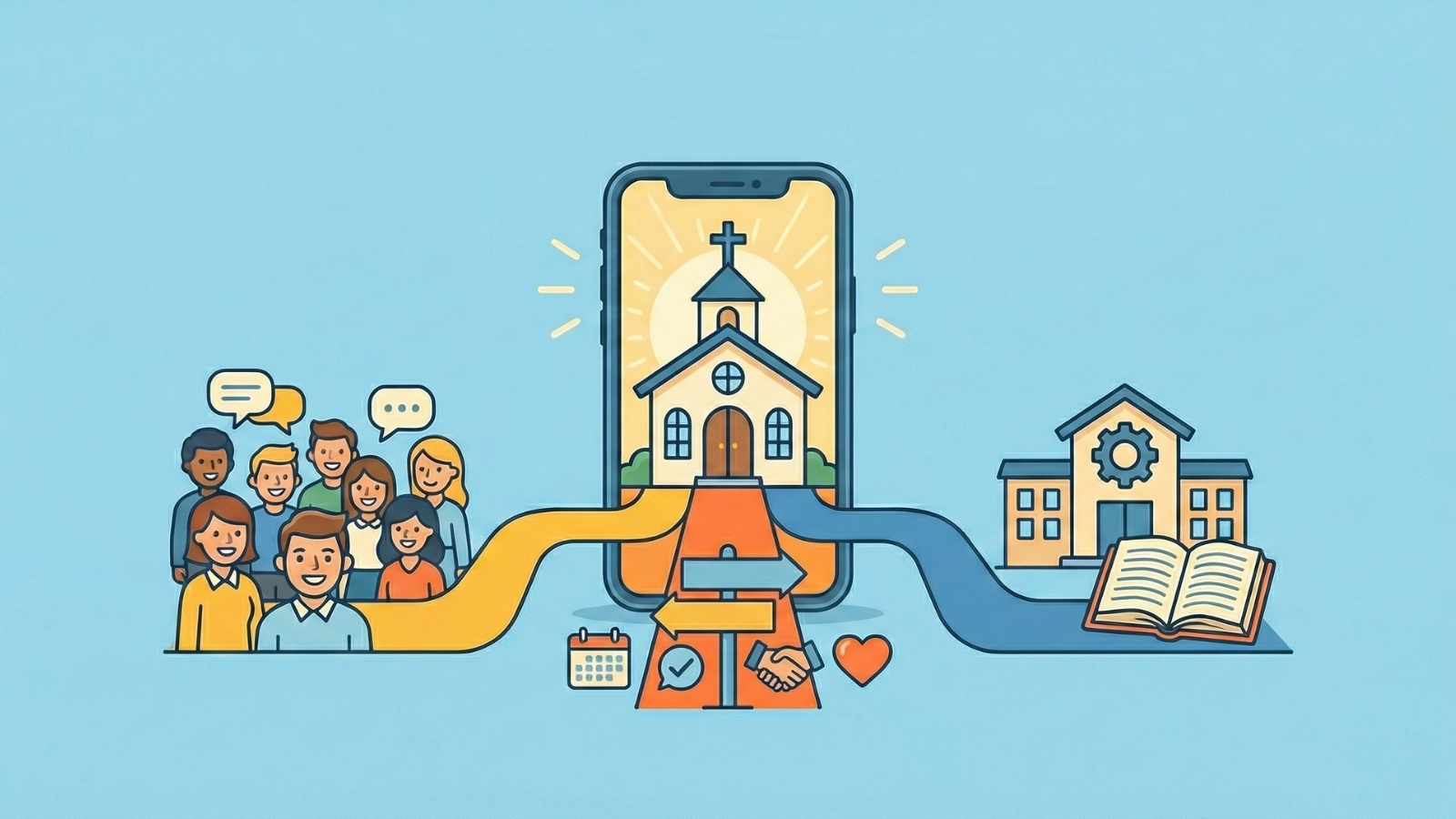
Your church’s front door isn’t made of wood anymore—it’s made of pixels.
For most people, their first interaction with your church community happens online, long before they ever attend a new church in person.
A church website is no longer optional. It plays a central role in your church’s online presence, helping you reach more people, communicate clearly, and support ministry throughout the week. The best church website isn’t complicated or flashy.
It’s clear, user-friendly, and built with purpose.
To be effective, your church website doesn’t need more pages or features. It simply needs to do three essential jobs well.
First Impressions for Your Guests
A church website should help guests quickly understand who you are, what to expect, and whether they feel comfortable visiting in person.
Your church website functions as the digital front door to your ministry. For many guests, it’s where first impressions are formed and decisions are made about whether to attend a service.
Because of that, church website design matters, but clarity matters more.
When visitors land on your homepage, they’re usually asking:
- Is this church for me?
- Will I feel welcomed?
- What should I expect when I visit?
The best church websites answer these questions immediately through simple layout, clear navigation, and strong user experience. A clean homepage with intuitive navigation makes a church website easy to use and easy to navigate.
Pages That Shape First Impressions
These pages work together to establish trust and clarity:
- Homepage: Your homepage should clearly communicate who you are, when you meet, and what someone should do next. A well-designed homepage uses clear calls to action and avoids unnecessary clutter.
- About Page: This page explains your church’s mission, leadership, and ministry focus. It helps visitors understand your heart and builds credibility.
- Beliefs Page: Visitors want theological clarity. This page should clearly explain what your church believes in language that’s accessible and honest.
- Plan Your Visit Page: One of the most important pages on any church website, this page removes uncertainty by explaining service times, kids ministry, parking, and what the experience is like.
Your church website should include each of these pages. And together, these pages create a welcoming, user-friendly church website that supports a positive first impression.
A Clear Pathway for Next Steps
An effective church website guides people toward action instead of leaving them confused about what to do next.
People visit church websites at different stages—guests, regular attenders, and members—and each group has different needs. That’s why clear calls to action are essential.
Ministry is about helping people take the next steps in following Christ. When a church website lacks clear navigation or direction, it creates friction and drop-off. When done well, a website seamlessly supports engagement and connection.
Your church needs a website that helps visitors get plugged into your church, not deter them.
Pages That Help People Take the Next Step
- Ministries Page: Helps people find where they belong and understand how to get involved in the life of the church.
- Giving Page: Your website should make it easy to give. Online giving should be simple, secure, and trustworthy. A clear giving page helps people understand why generosity matters and can help increase giving over time.
- Contact Page: Makes it easy for people to reach a real person with questions, prayer requests, or pastoral needs.

Common Calls to Action Churches Should Highlight Include:
- Plan a visit
- Join a small group
- Volunteer or serve
- Request prayer or pastoral care
- Give online
Clear calls to action, simple forms, and thoughtful optimization make a church website easier to use and more effective for ministry.

A Resource Hub for Your Members
A church website should support discipleship and ministry beyond Sunday morning.
Paul writes in Ephesians 4:11–12 that church leaders are called to equip the saints for the work of ministry. A well-built church website can support that calling by serving as a central resource hub.
An effective church website doesn’t stop working after the sermon ends. It continues supporting churches and ministries by keeping members informed, connected, and equipped throughout the week.
Resources Members Look for Most
- Sermons: A sermons page allows members to revisit teaching and share messages with others, extending your church’s online presence.
- Events and Calendars: When kept accurate and simple, your upcoming events pages help people stay engaged without overwhelming them.
- Forms and Resources: Sign-ups, registrations, and ministry resources support communication and organization.
When these resources are easy to find, your church website improves user experience and strengthens ministry alignment.
How the Three Jobs Work Together
There are 3 essentials jobs of a church website:
- First Impressions (Guests): Build trust and confidence
- Clear Next Steps (Everyone): Guide people toward engagement
- Resource Hub (Members): Support discipleship and ministry
The best church website design balances all three—welcoming guests, guiding engagement, and equipping members.

Building a Church Website Doesn’t Have to Be Complicated
Many churches assume they need a custom website or a professional designer to build a church website. In reality, a modern website builder with pre-built templates makes it easy to create a website that looks good and works well.
With user-friendly tools, AI-assisted features, and built-in SEO optimization, churches can create a website that is optimized, easy to manage, and effective for ministry. Whether starting with a free website template or improving an existing site, the goal is the same: build an online presence that helps reach more people and supports ministry.
Putting Your Website to Work
An effective church website does more than exist—it serves a purpose. And that purpose is ministry.
When your website welcomes guests, provides clear pathways for next steps, and equips members with helpful resources, it becomes a meaningful extension of your church’s mission.
A well-designed, user-friendly church website makes it easier to connect with people, support ministry, and increase engagement. In that way, your website isn’t just a digital platform—it’s a tool God can use to reach more people and advance the work of the Kingdom.
Church Website FAQs
Do small churches really need a website?
Yes. Even small churches benefit from having a clear, simple website. Most people will look up your church online before ever visiting in person. A basic website that clearly communicates who you are, when you meet, and how to get connected can remove uncertainty and help guests feel confident about visiting.
What should be the most important page on a church website?
For most churches, a Plan Your Visit page is one of the most important pages on the site. It helps first-time guests know what to expect and reduces anxiety by answering common questions about service times, location, kids ministry, parking, and dress.
How many calls to action should a church website have?
It’s better to have a few clear calls to action than many competing ones. Focus on the most important next steps—such as planning a visit, joining a group, serving, or contacting a pastor—and make those actions easy to find and simple to complete.
How often should a church website be updated?
Your website should be reviewed regularly and updated whenever key information changes. At a minimum, service times, events, sermons, and ministry information should stay current so members and guests can trust what they see online.
Can a church website really support discipleship?
Yes! While a website can’t replace relationships, it can support discipleship by providing access to sermons, resources, calendars, forms, and ministry information. When used well, a website helps equip members and keeps the church connected throughout the week.
What’s the biggest mistake churches make with their websites?
One of the most common mistakes is assuming people already know what to do. When websites lack clarity, guests and members are left confused about next steps. A good church website prioritizes clarity, direction, and ease of use over complexity.