How The One Big Beautiful Bill Act Impacts Charitable Giving

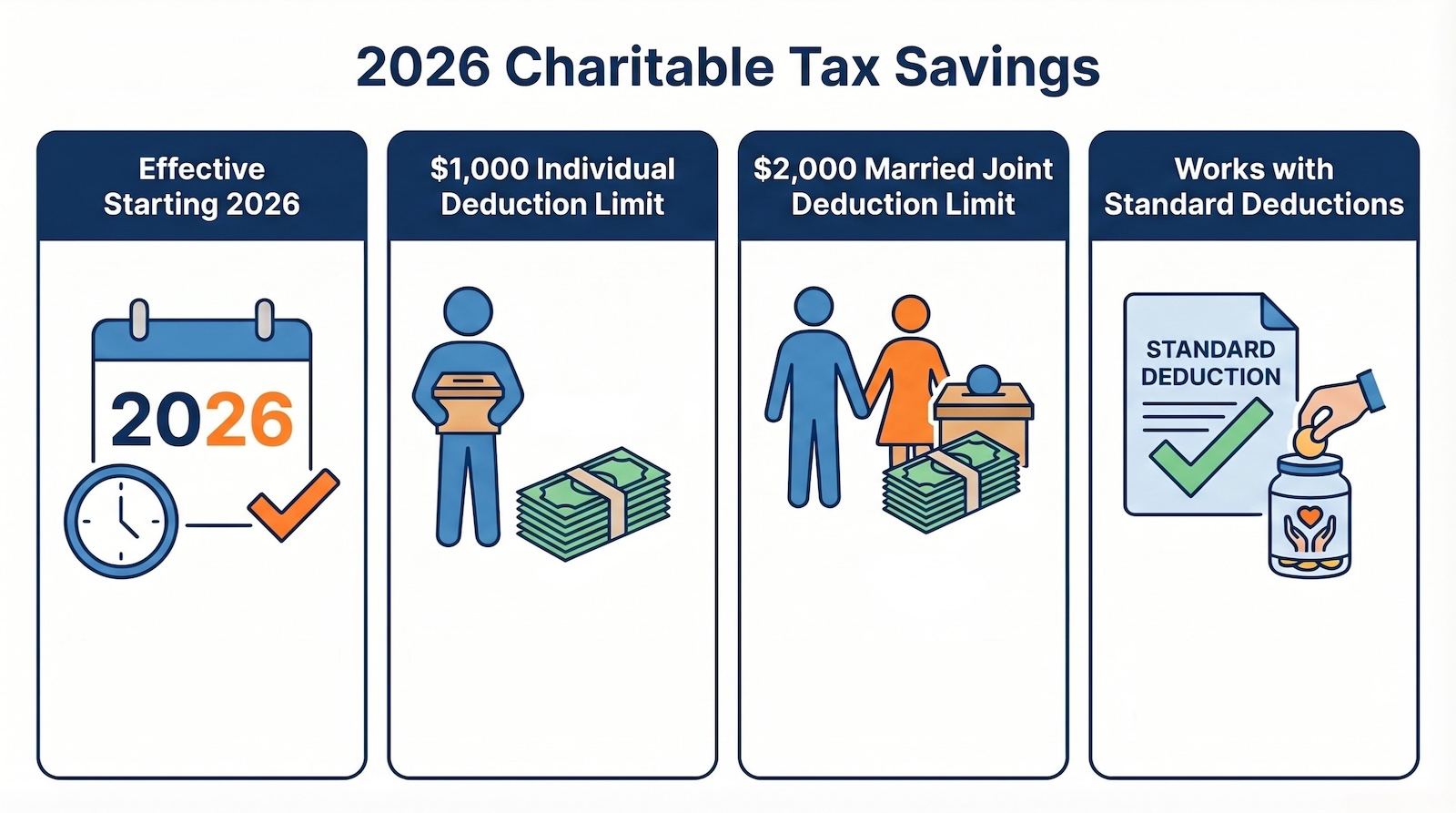
- Starting in 2026, the Universal Charitable Deduction allows Up to $1,000 in charitable deductions for individuals and Up to $2,000 for married couples filing jointly
- Members can claim this deduction even if when taking the standard deduction.
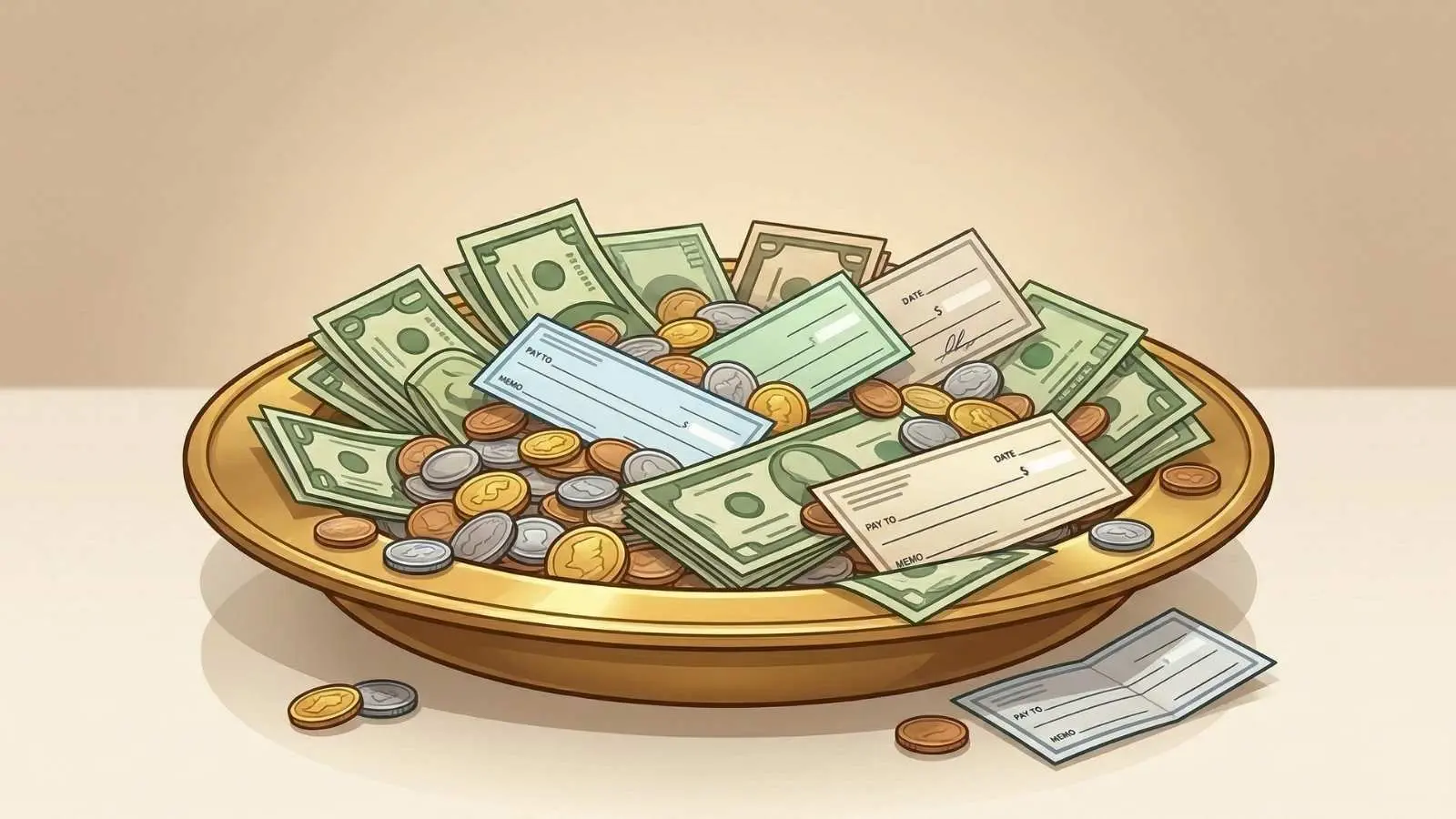
For the first time in years, church members who don’t itemize their tax deductions will receive a direct charitable deduction for giving.
This new rule removes a common frustration many faithful donors have experienced since the 2017 Tax Cuts and Jobs Act increased the standard deduction.
What Changed? The Universal Charitable Deduction Explained
In recent years, many church members stopped seeing a tax benefit from giving, not because they stopped being generous, but because they no longer itemized deductions.
When the standard deduction increased under the 2017 Tax Cuts and Jobs Act (TCJA), charitable contributions no longer reduced taxable income for most filers. As a result, tithes and offerings often provided no direct tax benefit, even as donors continued to give faithfully.
Beginning in 2026, that changes.
Under the One Big Beautiful Bill Act (OBBBA), a new deduction for non-itemizers restores tax benefits for charitable giving (without requiring taxpayers to itemize deductions). This restores a tax benefit many donors lost when itemizing became unnecessary for most households.
History Lesson: This isn’t entirely new. During 2020–2021, temporary COVID-era rules allowed non-itemizers to deduct limited charitable gifts (up to $300 for individuals and $600 for married couples). Under the OBBBA, the deduction is both more generous and, most importantly, permanent.
How Much Can Church Members Deduct?
Under the new provision:
-
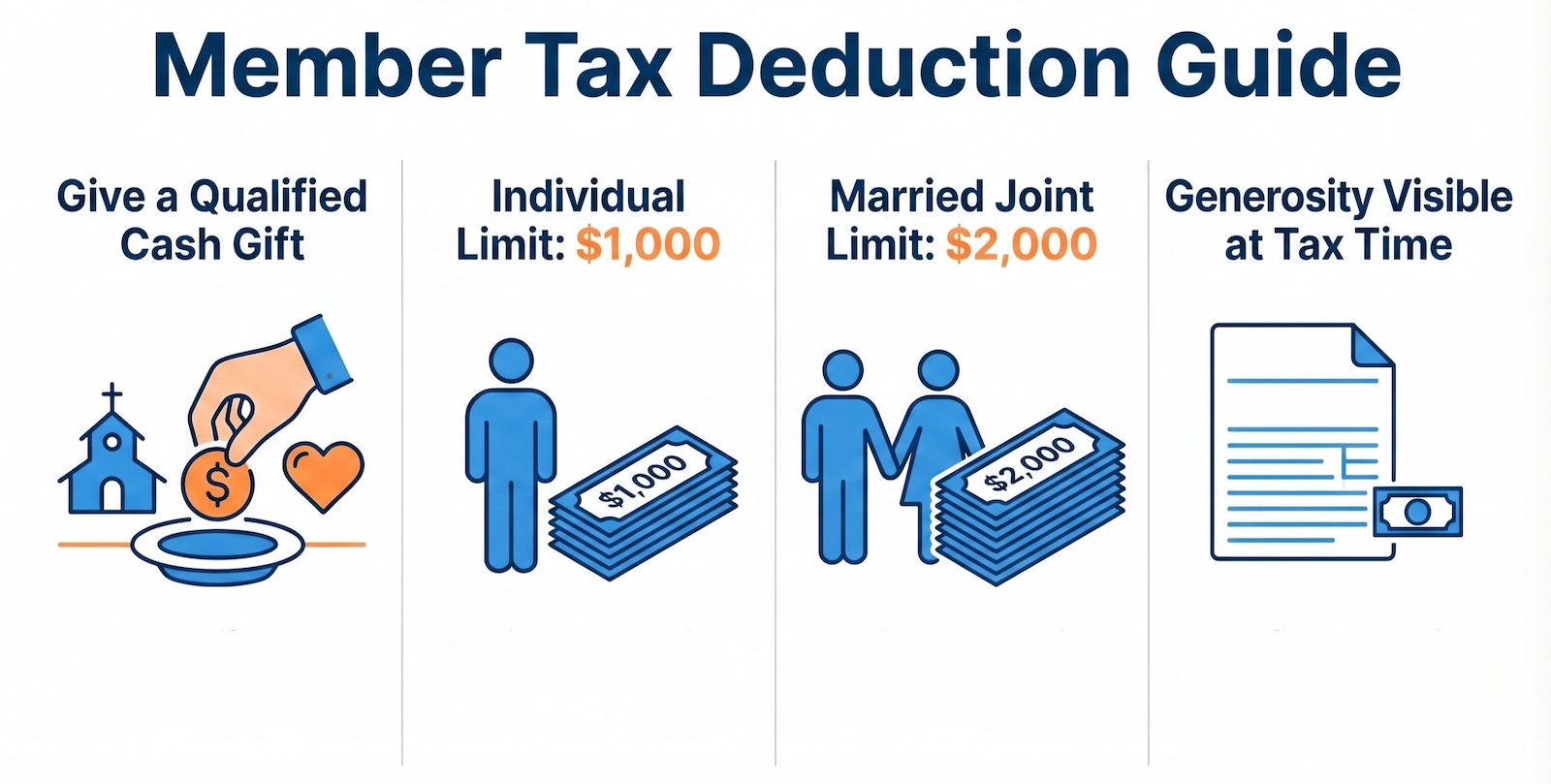
Individuals can deduct up to $1,000
-
Married couples filing jointly can deduct up to $2,000
These limits apply to qualified cash charitable contributions, including gifts made to churches and other public charities.
While this new deduction may not change why members give, it does help ensure their generosity is no longer invisible at tax time, especially for donors who rely on the standard deduction and fall into lower or middle tax brackets.
A Note for Members Who Itemize
While the One Big Beautiful Bill Act (OBBBA) primarily helps non-itemizers, church members who itemize (and who often fall into higher tax brackets) should be aware of a new charitable deduction floor (sometimes called the “itemizer floor”).
Starting in 2026, only charitable gifts that exceed 0.5% of their Adjusted Gross Income (AGI) can be deducted.
Example: If a church member earns $100,000, the first $500 of their giving doesn’t count toward itemized deductions. This makes the standard deduction ($1,000 for singles, $2,000 for married couples filing jointly) even more appealing for many donors.
For churches, this is worth noting because it affects how members may think about giving and the potential tax benefits.
Why The Deduction for Non-Itemizers Matters for Churches
This update matters because it helps both pastors and church members.
For pastors:
-
It offers a helpful talking point without pressure or guilt
-
It reframes giving as informed stewardship, not obligation
-
It’s easy to share without turning into a “giving sermon”
For members:
-
It affirms that faithful giving still matters (practically and spiritually)
-
It benefits families who rely on the standard deduction
-
It helps younger households and fixed-income givers, especially
This isn’t about motivating generosity through tax savings. It’s about removing friction and helping donors understand how to make charitable contributions wisely.
A New, Non-Confrontational Way to Talk About Giving
This change doesn’t require a sermon series or a stewardship campaign.
It works well as:
-
A short church newsletter update
-
A giving reminder during offering time
-
A note tied to financial planning or 2025–2026 tax planning
Simply sharing the information helps your members steward their finances wisely without pressure.
Ready-to-Share: Church Newsletter Template
Good News for Our Church Family
Beginning in 2026, a new federal tax law, the One Big Beautiful Bill Act (OBBBA), allows taxpayers who take the standard deduction to deduct up to $1,000 (individuals) or $2,000 (married couples filing jointly) in annual charitable contributions, including gifts to churches.
That means your giving to the church may once again provide a tax benefit, even if you take the standard deduction. While generosity is first and foremost an act of worship, we wanted to share this helpful update as you plan your giving and finances.
If you have tax-specific questions, we encourage you to consult a tax professional.
Good News Worth Sharing with Your Church
Giving has always been about worship, obedience, and trust... not tax benefits.
But when wise stewardship and practical encouragement align, it’s worth sharing the news.
This change gives pastors an opportunity to serve their congregation simply by informing them. And for many faithful givers, it’s a welcome reminder that their generosity is still seen, valued, and supported.
Financial Disclaimer: This article is provided for informational purposes only and does not constitute professional accounting, tax, or financial advice. Church tax laws are complex and subject to change based on federal, state, and denominational regulations. ChurchTrac is a software provider, not a CPA firm. We strongly recommend consulting with a qualified tax professional or certified public accountant before making financial decisions or filing tax-related documents for your ministry.



FAQs: The OBBBA's Gift
Starting January 1, 2026, the One Big Beautiful Bill Act (OBBBA) allows taxpayers who do not itemize deductions to deduct up to $1,000 (single filers) or $2,000 (married couples filing jointly) in annual cash donations to churches and other qualified public charities.
No. That’s the key benefit—this applies even when taking the standard deduction.
Yes, as long as the donation is made to a qualified charitable organization, such as a church.
No. Churches should share general information and encourage members to consult a tax professional for personal guidance.