The $2,000 Rule: How OBBBA Changes 1099's for Churches

Starting in 2026, the US federal threshold for issuing a 1099 increases from $600 to $2,000.
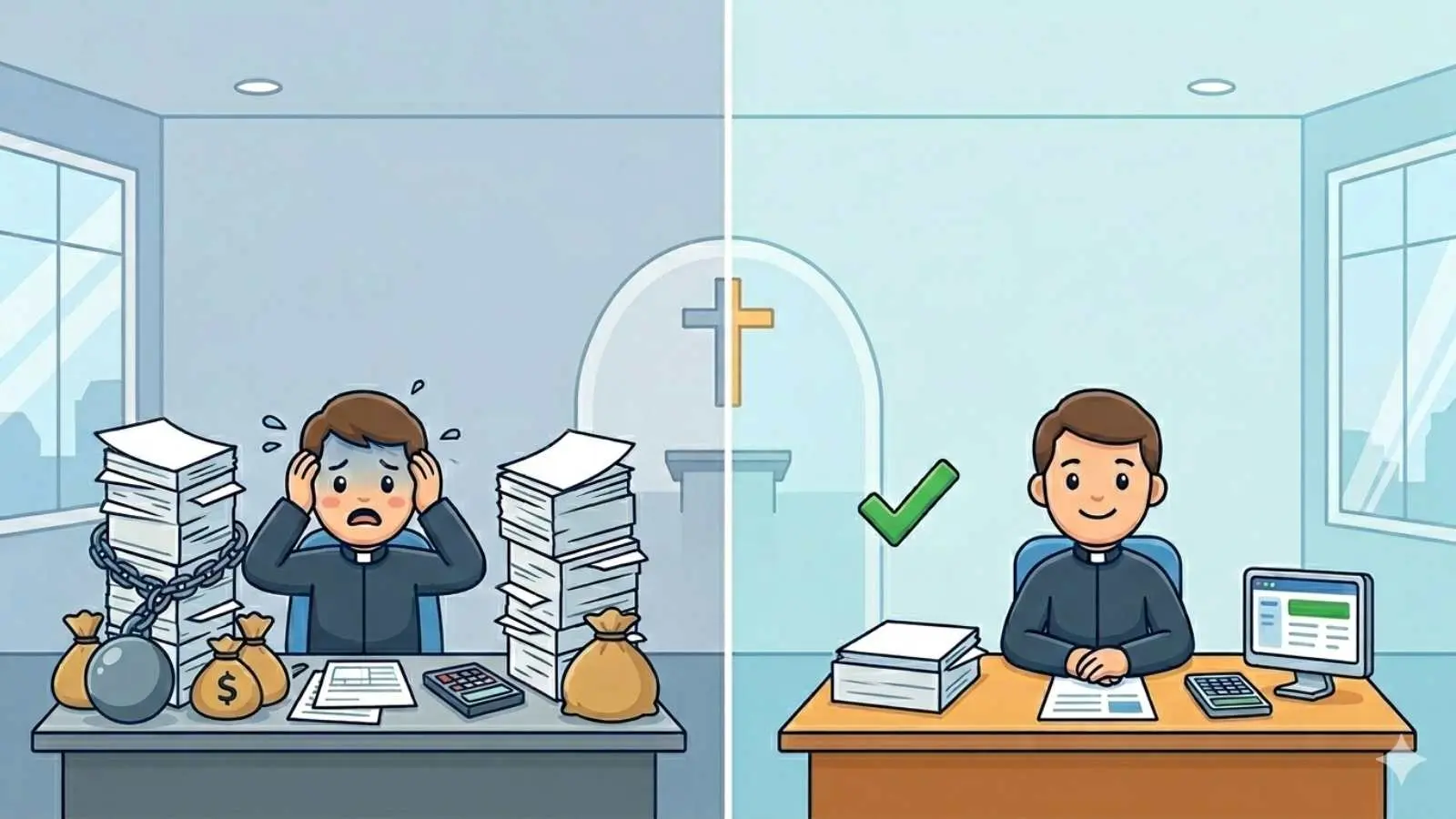
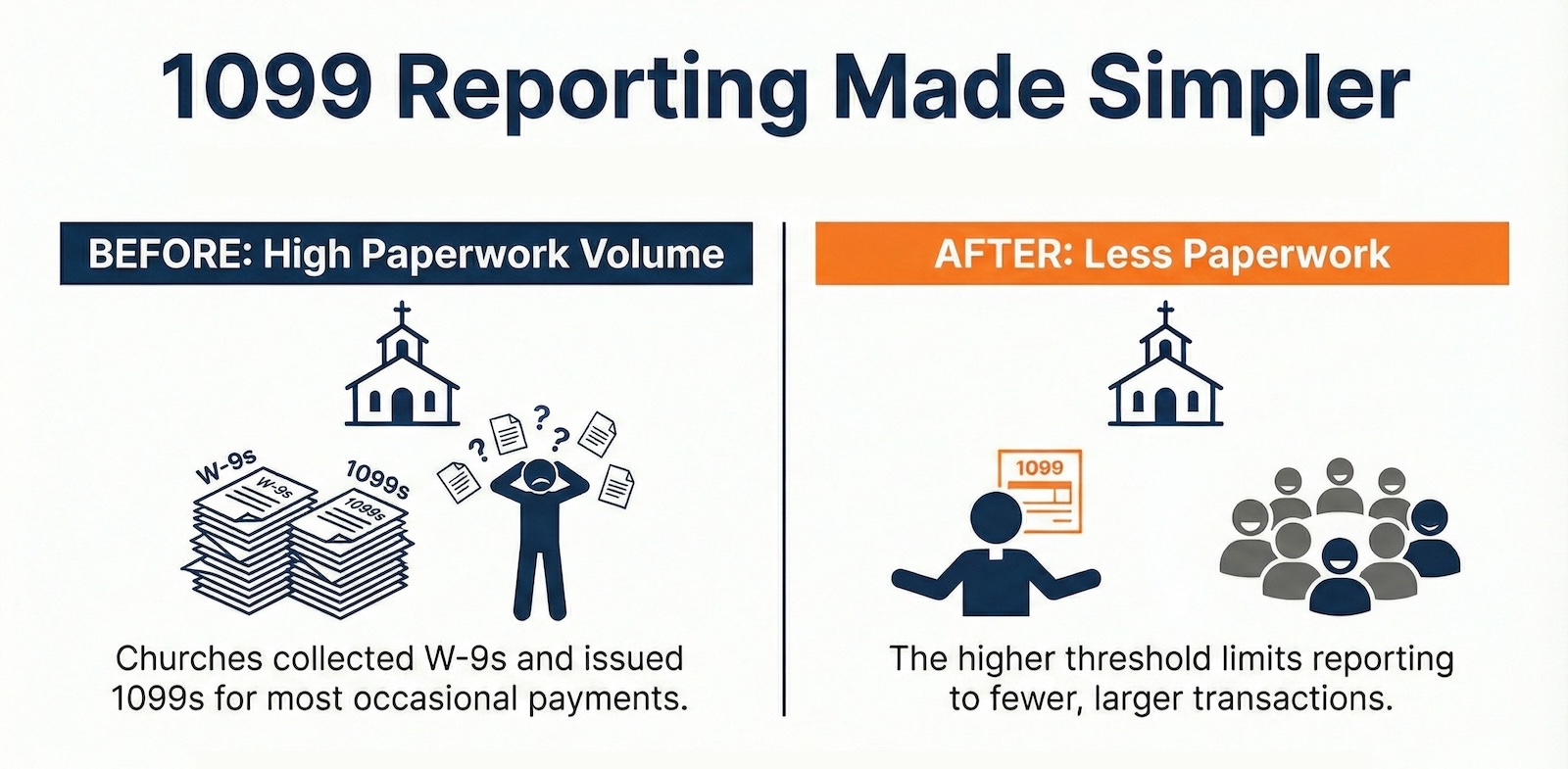
For years, churches have followed a $600 1099 reporting threshold, often requiring paperwork for small, one-time payments like guest speakers or musicians.
Starting in 2026, that changes.
Under the OBBBA, the federal 1099 threshold increases from $600 to $2,000; a change commonly referred to as the $2,000 Rule.
Understanding the $2,000 Rule for Churches
A new federal rule is changing when churches are required to issue 1099 forms. At the center of this update is a higher reporting threshold, which reduces how often churches must collect W-9s and issue 1099s, particularly for occasional or one-time payments. The goal is not to remove accountability, but to eliminate unnecessary administrative burden.
While the change itself is simple, understanding how it applies in real church situations is key to staying compliant without overdoing paperwork.
What is the One Big Beautiful Bill Act (OBBBA)?
OBBBA stands for the One Big Beautiful Bill Act, a federal law aimed at modernizing and simplifying various reporting and administrative requirements. One of its goals was to address outdated thresholds that no longer reflected how organizations operate today.
For churches, this matters because the old $600 threshold had remained unchanged for decades. What once represented a meaningful payment had become a routine, low-risk amount, yet still triggered full tax reporting requirements. OBBBA raises that threshold to better match today’s reality.
What is the $2,000 Rule?
The $2,000 Rule refers to the new federal reporting threshold for contractor payments starting in 2026. Under this rule, churches are not required to issue a 1099 unless total payments to an individual reach $2,000 or more during the calendar year.
This applies to:
In short, many small, one-time payments that previously triggered paperwork no longer will.
What exactly changed under the new rule?
The most important change is the increase in the reporting threshold, not the elimination of reporting itself. The requirement to issue a 1099 still exists; it simply begins at a higher dollar amount.
Here’s the comparison:
- Before 2026: 1099 required at $600
- Starting in 2026: 1099 required at $2,000
Once a contractor’s total payments reach or exceed $2,000 in a year, a 1099 is still required for the full amount. The difference is that churches are no longer forced into compliance steps for modest payments that pose little risk.
Why does the new law matter for churches?
Churches often make irregular and ministry-related payments, not ongoing contractor wages. Guest speakers, substitute musicians, childcare help, and event support are common, and many of these payments fall between $600 and $2,000.
Under the old rule, even a one-time $700 honorarium was required:
- Collecting a W-9
- Tracking the payment for reporting
- Issuing a 1099 at year-end
The new threshold removes much of this low-value administrative work while keeping reporting requirements intact for higher-dollar compensation. For many churches, this will significantly reduce year-end stress.
1099 Examples at my church:
When it comes to reasons for needing to issue a 1099, here are some common examples for a small church like mine:
- Minor Repairs: A local handyman fixing a leak and fixing a section of roofing ($850).
- Landscaping "Cleanup": A seasonal crew doing a major fall or spring cleanup ($1,200).
- Guest Speaker: Paying a pastor to be our main speaker for a church event ($700)
Do Churches Need To Record Payments Under $2000?
While the threshold has increased, tracking payments is still essential. Churches must continue monitoring cumulative payments to each contractor throughout the year.
What hasn’t changed:
- Payments must still be tracked by the individual/company
- Once the $2,000 threshold is crossed, reporting is required
- Employees are still reported using W-2s, not 1099s
The rule simplifies when reporting is required; it does not remove the responsibility to know when the threshold is reached.
What Churches Should Do Now (Preparing for 2026)
Churches can take a few simple steps now to prepare for the 2026 change.
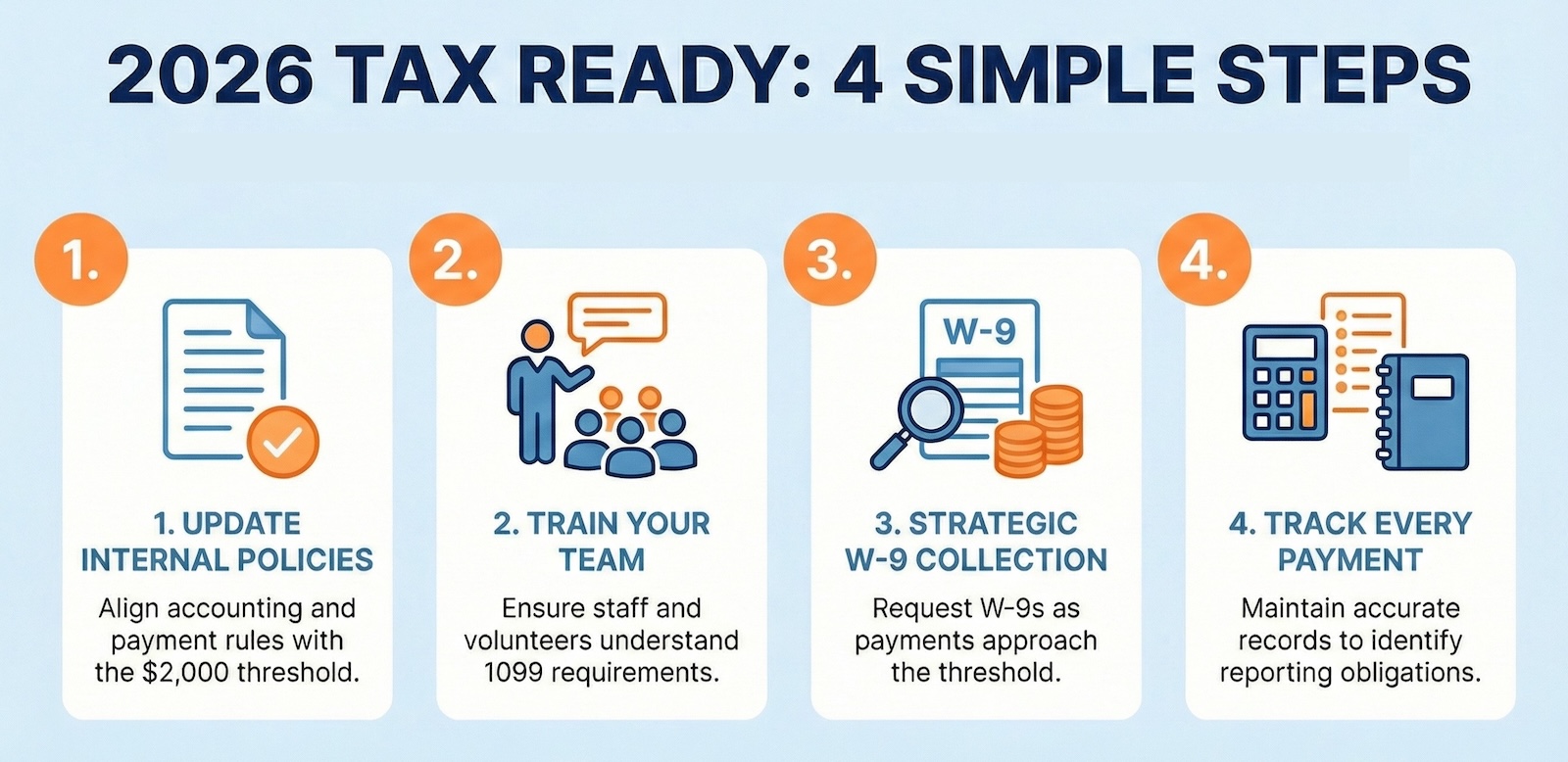
- Start by reviewing and updating internal accounting and payment policies so they reflect the new $2,000 reporting threshold.
- It’s also important to train staff and volunteers who handle payments or bookkeeping, ensuring they understand when a 1099 is required and when it is not.
- It’s also a good time to rethink how W-9s are collected. Instead of requesting them automatically at the first payment, churches can move to a more intentional approach as payments begin to approach the threshold.
- Finally, continue tracking all contractor payments throughout the year. While fewer 1099s may be required, accurate records remain essential to knowing when reporting obligations apply.
Make 2026 Easier: Download our free 2026 Church 1099-NEC Checklist
To help, we’ve created a free 2026 Church 1099-NEC Checklist designed specifically for church leaders and administrators. The checklist walks you through how to know when a 1099 is actually required, how to track payments toward the $2,000 threshold, and how to avoid unnecessary W-9 collection while staying compliant with confidence.
Download the 2026 Church 1099-NEC Checklist
A Small Rule Change With a Big Administrative Win
The move from $600 to $2,000 may be simple, but the impact for churches is significant. Fewer required 1099s means less paperwork, fewer W-9 chases, and a smoother year-end process (without sacrificing compliance).
For church leaders juggling countless responsibilities, the $2,000 Rule quietly removes friction and gives time back where it matters most.
Financial Disclaimer: This article is provided for informational purposes only and does not constitute professional accounting, tax, or financial advice. Church tax laws are complex and subject to change based on federal, state, and denominational regulations. ChurchTrac is a software provider, not a CPA firm. We strongly recommend consulting with a qualified tax professional or certified public accountant before making financial decisions or filing tax-related documents for your ministry.


FAQ: OBBA For Churches
Starting in 2026, the federal requirement to file Form 1099-NEC for contractor payments increases from $600 to $2,000. This means churches no longer have to issue a 1099 for payments under $2,000 in a calendar year, reducing unnecessary paperwork for small, one-time payments. The rule still requires reporting once total payments to an individual reach or exceed $2,000.
In most cases, no. If total payments to an individual remain under $2,000 in a calendar year, a 1099 is not required beginning in 2026. However, churches still need to track payments carefully throughout the year. If cumulative payments reach or exceed $2,000, a 1099 must be issued.
Yes. The IRS uses a threshold to determine when a Form 1099-NEC is required. Effective 2026, that threshold is $2,000 in total payments to an individual during the year. Before 2026, the threshold was $600.
The new $2,000 threshold does not apply until the 2026 tax year. For calendar year 2025, the existing $600 threshold remains in effect. Churches must still use the $600 rule for any 1099 reporting for payments made during 2025.
If a 1099 that should be filed is not reported, the IRS may assess penalties for failure to file, even if the amount is small. The new $2,000 threshold reduces the number of small payments that require reporting, but once payments reach or exceed the threshold within a year, churches must issue the appropriate 1099 form. Proper tracking and timely reporting help avoid penalties.