Buying Church Software? Avoid This One Fatal Mistake

-
Funding dictates the future. Corporate buyouts of church management software often trigger price hikes, reduced support, and slowed development.
-
Don't beta-test your ministry. Protect your congregation's data by avoiding startups or platforms with outsourced support and development.

When shopping for church software, leadership teams always ask the same two questions: What are the features and what does it cost?
But there’s a third, hidden question that matters infinitely more to the long-term health of your ministry:
Who owns this church software company?
As an industry insider who's seen first-hand the train wreck of acquisitions and startups fail... I'm going to pull back the curtain on how both of these models put your ministry at risk.
Dangers of Corporate Backed Church Software
When a church software company takes on massive venture capital or gets bought out by a large firm, the mission of the company fundamentally shifts overnight. It usually results in higher costs, worsening support, and reduced development.
Danger 1: Increased Prices
To meet aggressive investor growth targets, companies will typically enact sudden non-negotiable price hikes. Breeze's acquisition by Tithely was a textbook example of this.
Within a year of their purchase, Breeze prices increased by 34%.

Parent companies often push users toward their more expensive bundled packages, like Tithely's $119/month All Access plan, rather than continuing to develop the cheaper standalone software.
Danger 2: Reduced Customer Support
To prepare for an acquisition, corporate parents look for overhead to cut. Independent, passionate customer support teams are often consolidated into centralized queues displaced by automated chatbots or a new team of people who don't actually know the product.
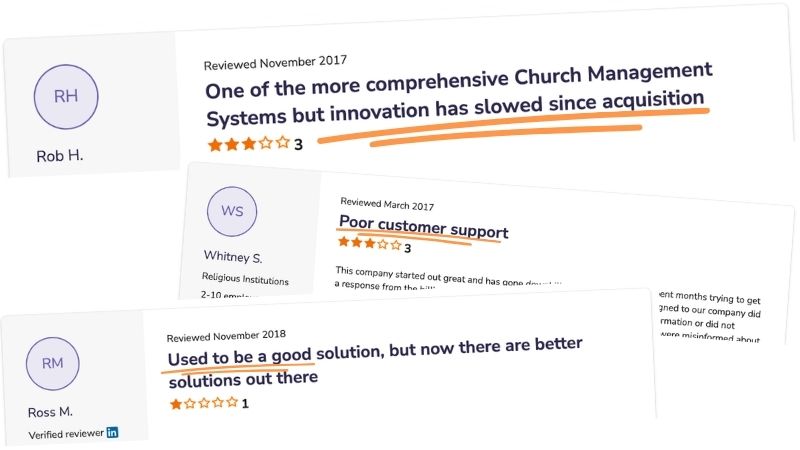
FellowshipOne is a good example of this. They were purchased by Ministry Brands in 2016. I found the subsequent reviews regarding their support and development afterwards to be very brutal...
Fun Fact: ChurchTrac has a real human support team that responds within ~1 business hour. Message the support team to test it.
Danger 3: Reduced Development
Rather than develop new features for their existing customers, most corporate umbrellas focus their development on the more expensive parent product. These companies would rather:
- Sell you other (more expensive) products
- Kill development for new features
- Push unwanted services offered by the parent brand
Dangers of Startups & Overseas Church Platforms
When church leaders realize they are being treated as corporate metrics by massive conglomerates, the natural instinct is to swing to the complete opposite end of the spectrum. It often results in using a platform with zero security, overwhelmed support, or it just outright disappears!
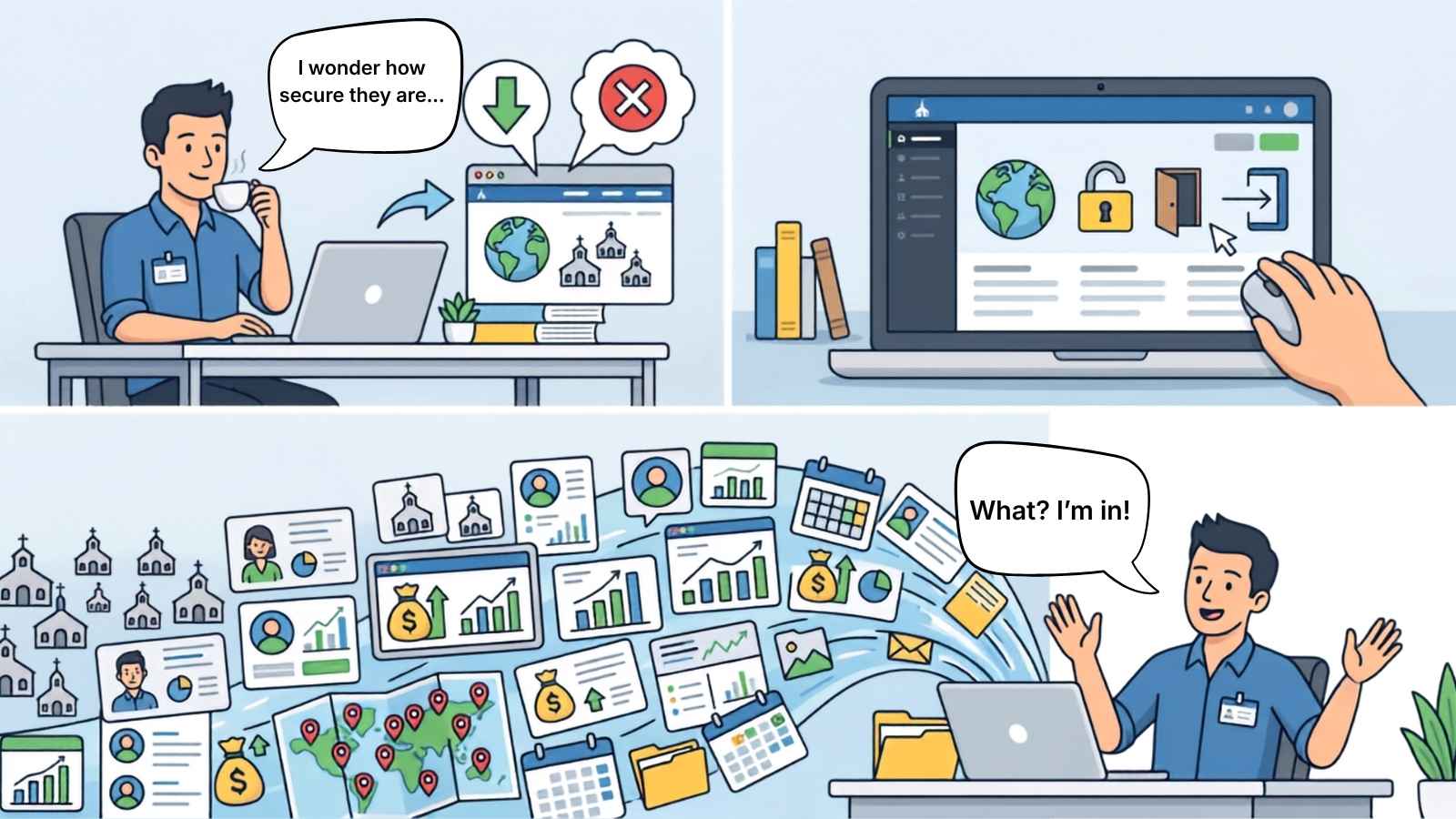
Danger 1: Poor Security
Keeping data secure, encrypted, and compliant with modern privacy standards requires significant, ongoing infrastructure investment and knowhow.
Underfunded companies frequently cut corners by doing the following:
- Relying on cheap web hosting platforms
- Using unvetted third-party tools
- Leveraging weak data encryption
Danger 2: Overwhelmed Support
Many startup and small shops are run by a tiny team of developer(s). Oftentimes it's just one or two people that are handling the software as a passion project or side-hustle. It's noble.
But If the platform crashes on a weekend, or if the main developer decides to take a vacation or pivot to a different career, your church is left entirely stranded without a lifeline.
Danger 3: The Unpredictable Sunset
The tech landscape is littered with startups that burned bright for 18 months, but then vanished. When a fly-by-night company runs out of cash or realizes the church market isn't a quick cash-grab, they close their doors.
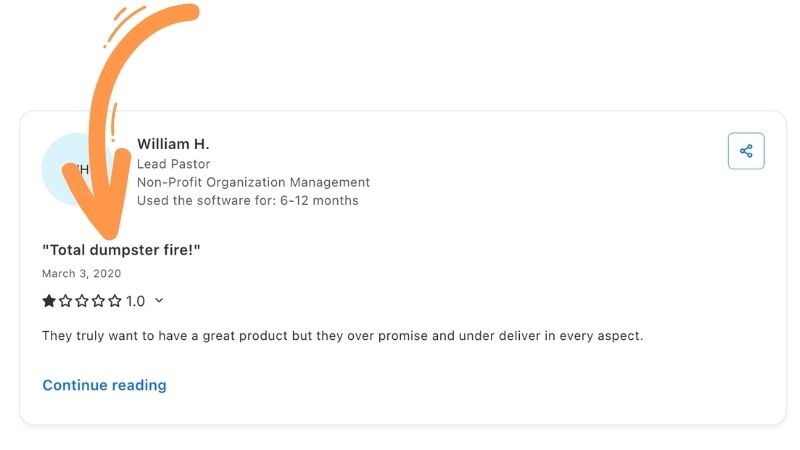
I saw this in real time with ChurchBase. They came in hot on social media and threw shade to many companies in our space.
Now? They are just a memory, with remnants of their carnage still visible on review sites like Capterra...
Other questions to ask before buying software for your ministry
When it comes to picking a church management software, you want to make sure the company has your best interests at heart and that they'll be around for the long haul. Here are the top 4 questions to ask:
1. Is this church software company privately owned?
If the company isn't privately owned, dig a little and see who owns them. Look at their track record of acquisitions and pricing. The wayback machine is a great tool for looking at the progression of websites and their pricing.
2. How long has this company been in business?
When it comes to your church's data, it's not advisable to use a company that hasn't been around at least 5 to 6 years. Your ministry doesn't have time to beta test.
3. Where is this company physically operating out of?
Using a church software in a country other than your own can be problematic in terms of development and support. Some claim to be based in the US, while the majority of their development and support is often outsourced overseas.
Pro Tip: The easiest way to find out where a support team is located is to politely ask that agent where their home church is located. You can even look up the timezone of the hours on their current or previous job listings.
4. Is this software company highly reviewed by churches?
Many review sites like Capterra or G2 are often padded and incentivized. Still read them, but take them with a grain of salt. One of the best places to get honest feedback is in ministry Facebook groups and Google reviews.
Church Management Shortlist
Whether you've been burned by big tech, or you're just tired of using spreadsheets, we've created a Church Management Shortlist to help you find the best solution for your church.
Whether you're a small church or a multi-campus mega church, you'll find a solution that will fit your needs without having to sift through a 20+ church app and tools.



Buying Church Software FAQs
The easiest way is to check the footer of their website or their "About Us" page. If a larger company owns them, it is usually buried in the fine print (e.g., "A Ministry Brands Company" or "Part of the Tithely family"). Sometimes it's helpful to search the company name on Crunchbase to see their funding history and whether they are backed by private equity or venture capital.
Sudden, non-negotiable price hikes are almost always the result of a corporate acquisition or pressure from venture capital investors. When a software company is purchased, the new parent company mandates aggressive revenue growth to recoup their investment. This inevitably leads to forced migrations to more expensive tiers or bundled packages you didn't ask for.
If a tech startup goes out of business, you risk losing your historical giving records, member databases, and giving statements entirely. If your provider is acquired, your data is transferred to the parent company's servers, subjecting your church to new privacy policies and new terms of service.
While supporting a passionate solo developer is noble, using a ChMS that hasn't been in business for at least 5 to 6 years has a significant operational risk. Startups often lack the capital required to maintain bank-level encryption and redundant server backups.