Church Giving Software: What To Look For

We're increasingly becoming a cashless society. The proof? 80% of payments were made digitally in 2022.
It's important for your church to make it easy for donors to give the way they prefer. And that means using a church-giving software that gives you lots of options.
This article covers everything you need to know about giving software for churches.
What Is Church Giving Software?
Church donation software helps track and manage giving, from online donations to cash and checks.
When it comes to managing and tracking church donations, here's what to look for.
Key Features of Effective Church-Giving Software
There are a few key features you should look for in an effective church contribution software:
1. Diverse Giving Options
One of the most necessary features of effective church offering software is the ability to support multiple giving avenues. Some of these include...
- Online Tithes with Credit Card
- ACH Donations
- Cash Offerings
- Check Donations
- Text Giving and more
- In-Kind Donations
Online donations are convenient for those who can’t attend services physically, while in-person donations might be preferred by those who value the tradition of giving during church gatherings. Providing multiple avenues for giving can increase engagement with the church community, allowing donors to participate in giving regardless of their physical location or circumstances.
Many online giving platforms also allow donors to set up recurring donations. This not only allows donors to "set it and forget it", but it's easier for some to budget their donations. And the church benefits because automatic donations mean you get income even when the member can't make it to worship! What's not to like about that?

2. Designations for Gifts
Did you know that allowing donors to designate their contributions can increase overall giving?
Studies have shown that when donors have the opportunity to support specific causes or funds that resonate with them personally, they are more likely to give more generously and consistently over time.
The ability to designate donations to specific funds or causes drastically improves donor engagement. In some giving platforms, donors do not have the option to designate their donations to specific funds!
When donors can choose which funds or causes to support, they feel more connected to the mission and vision of the church. Also, designated giving options are particularly valuable during special campaigns or projects. Churches can create targeted fundraising efforts for specific needs, such as building campaigns or supporting missionaries.
3. Comprehensive Reporting Tools
Taking designated contributions and generating comprehensive reports is essential for church administration and members' records.
Detailed reports provide church leadership with valuable insights into the financial health of the church, as well as the ability to track income, expenses, and overall giving trends to make more informed decisions about budgeting and allocating resources.
Not only are these reports invaluable to church leaders, but through transparency, they build trust and confidence among donors.
4. User-Friendly Interface
Above all, church tithing software needs to be one thing: USER FRIENDLY!
That's because clunky, poorly designed donation software will only lead to frustration and wasted time. Choose a platform that's user-friendly and is regularly updated. Not sure how to tell which platform will work for you? Join that company's user community and check out their YouTube channel to get a sneak peek before buying.

The Limitations of Online-Only Giving Solutions
Online-only giving solutions may be quick and convenient, but they have many limitations that churches should consider. Many providers of online giving solutions, such as PayPal or CashApp, primarily focus on facilitating donations without considering the broader financial management needs of churches.
While online giving for your church is important, it’s just one aspect of the software tools your church needs for accepting and tracking donations of ALL kinds.
These online-only giving solutions may only be convenient up until the donation is made. Most online-only giving solutions may not seamlessly integrate with other church management software. This can lead to inefficiencies, duplicate data entry, and a lack of holistic financial oversight in recording the online tithes and offerings.
Check out our video called "How to Switch Online Giving Platforms" to learn more!
Churches Need More Than Donation Software
An all-in-one church management software has many advantages that make it the ideal choice for churches trying to simplify their financial management:
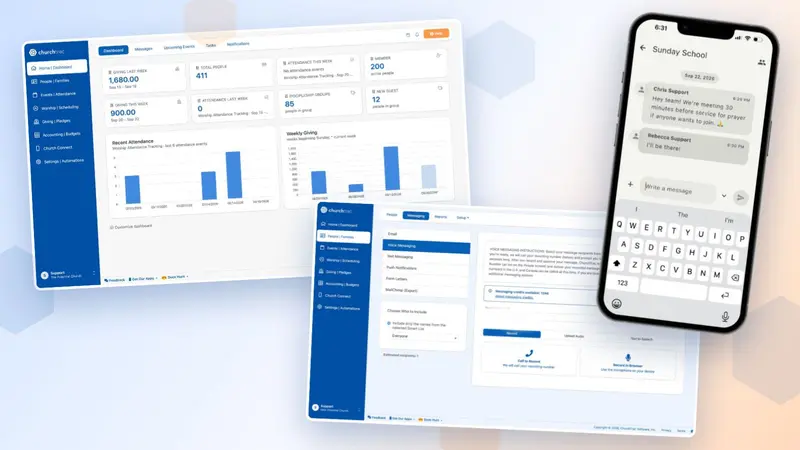
Instead of juggling multiple programs for accounting, donation tracking, member management, event planning, and communication, churches can streamline these processes into a single platform. Think of all the time you could save by doing everything in one place!
Remember when you had to create a PayPal account just to accept online donations (and eat their processing fees)? With an all-in-one giving software, online giving capabilities are built in! Members and donors can easily make contributions online through secure payment gateways integrated into the same system used for managing other aspects of the church. This integration not only protects members from scams or fraud, but also streamlines the process of receiving donations, recording them, and generating reports.

Church Giving Software FAQs
- How does church-giving software work? Church-giving software allows congregants to make donations electronically through various channels, such as online platforms, mobile apps, text-to-give services, or automated bank transfers. The software tracks and records donations, generates giving reports, and provides tools for managing donor information and communication.
- Is church-giving software secure? Reputable church-giving software providers prioritize security and employ encryption technology and secure payment gateways to protect donors' financial information. It's essential to choose a trusted software provider that complies with industry standards for data security and privacy.
- What features does church-giving software typically offer? Church giving software typically offers a range of features, including online giving capabilities, donation tracking and reporting, donor management tools, communication tools (such as email and text messaging), event registration, and integration with church management systems.
- Can donors set up recurring giving with church giving software? Yes, most church-giving software platforms offer the option for donors to set up recurring donations on a regular schedule (weekly, monthly, etc.). This feature allows donors to automate their giving and support the church's ministries consistently over time.
- Can donors access their giving history or contribution statements with church giving software? Donors can typically access their giving history and contribution statements through the church giving software's online portal or mobile app. They can log in to their account to view and download their giving records for tax purposes or personal reference.
- Are there costs associated with church-giving software? Yes, there is usually a cost associated with using church-giving software, which may include subscription fees, transaction fees for online donations, or setup fees for additional features. The cost varies depending on the software provider and the specific features and services included in the package.

More Than an Online Giving Platform
An all-in-one church giving platform makes it easier to manage donations and focus more on ministry. By streamlining administrative tasks and adapting to modern giving methods, these platforms play a key role in helping churches stay effective in their mission.