How to Use Your Church Facebook Page to Love Your Neighborhood (Not Just Advertise to It)

- This guide will show you how to move beyond advertising and start building meaningful connections online.
- From defining your mission for Facebook ministry to creating content that serves and encourages, we'll walk through practical ways to use your church’s social media presence to meet real needs in your community.
Facebook has become one of the most powerful tools churches use to reach people. But too often, it’s treated like nothing more than a digital bulletin board—packed with event flyers, reminders, and announcements.
While there’s nothing wrong with sharing what’s happening at your church, that approach misses something bigger: the opportunity for your church to use Facebook as a ministry tool to love your neighborhood.
1. Define Your Mission for Facebook Ministry
It all begins with a shift in focus. Before posting anything, take a step back and ask: Why is our church on Facebook? If the only goal is to get people in the pews, you’ll likely struggle to gain meaningful traction.
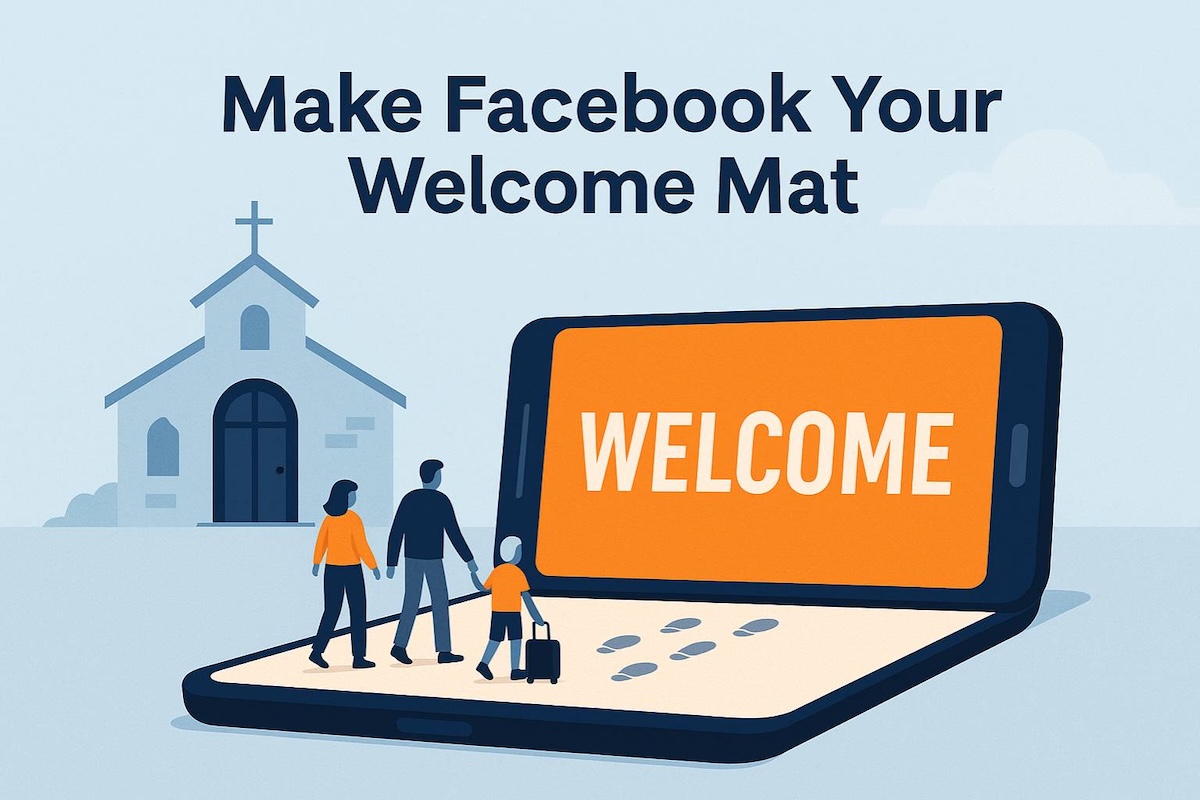
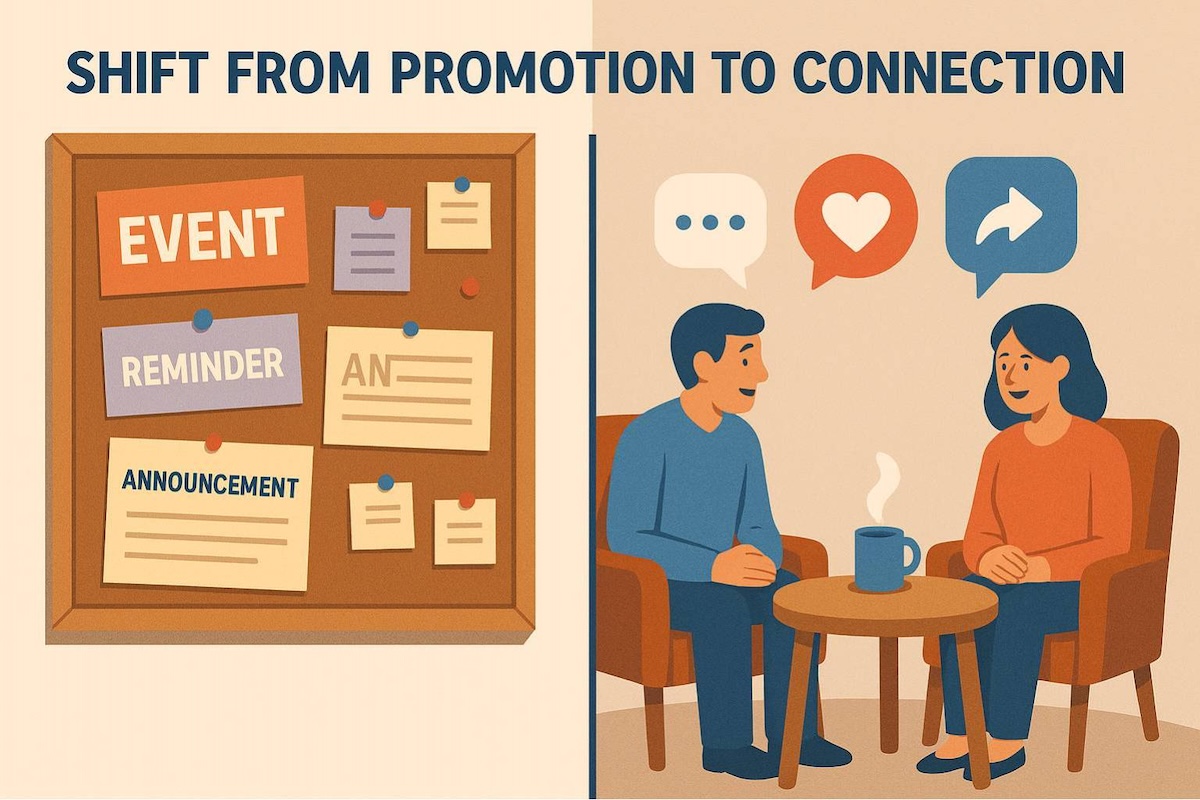
Shift the Focus from Promotion to Connection
Instead, shift your focus from promotion to connection. Think of Facebook as your church’s digital front porch—where your neighbors can stop by, get to know you, and find encouragement without pressure.
Ministry always begins with listening. Explore local Facebook groups, community pages, or even neighborhood forums to learn what matters most to the people around you. Are families asking about affordable childcare? Are neighbors seeking local food pantries? Are small businesses needing community support?
When you understand the real needs in your neighborhood, your church’s Facebook page can become a trusted place for resources, encouragement, and connection.
3. Develop a Content Plan Around Service and Encouragement
Instead of only posting events, create a rhythm of content that serves your community:
- Encouragement: Share scripture, devotionals, or short sermon clips
- Stories: Post testimonies, answered prayers, or outreach highlights that show God at work
- Local Spotlights: Highlight a local business, nonprofit, or school
- Practical Help: Share food drives, community resources, or volunteer opportunities
A consistent plan not only strengthens your message but also positions your church as a community partner, not just another advertiser. Plus, it gives church members simple, shareable content they can post to reach their own friends and neighbors.
4. Encourage Two-Way Communication
Facebook isn’t meant to be a one-way loudspeaker. Engagement happens when you invite conversation:
- Respond promptly to comments and private messages
- Invite prayer requests and take time to pray for people by name
- Use polls or live videos to interact in real time
- Include Calls to Action in your posts
5. Measure Impact Beyond Likes and Shares
Instead of asking, “How many likes did we get?” consider whether a new family discovered your church through a shared post, whether someone requested prayer through Messenger, or whether a community partner thanked you for promoting their event. These are the kinds of interactions that reveal genuine connection and ministry at work.
Ultimately, whether it’s through Facebook posts that keep your congregation updated or Facebook Live streams that reach people in real time, your church’s presence on social media can be a powerful tool for ministry.
Common Pitfalls
Even with the best intentions, many churches fall into patterns on Facebook that limit their impact. Recognizing these pitfalls early on can help your ministry avoid them:
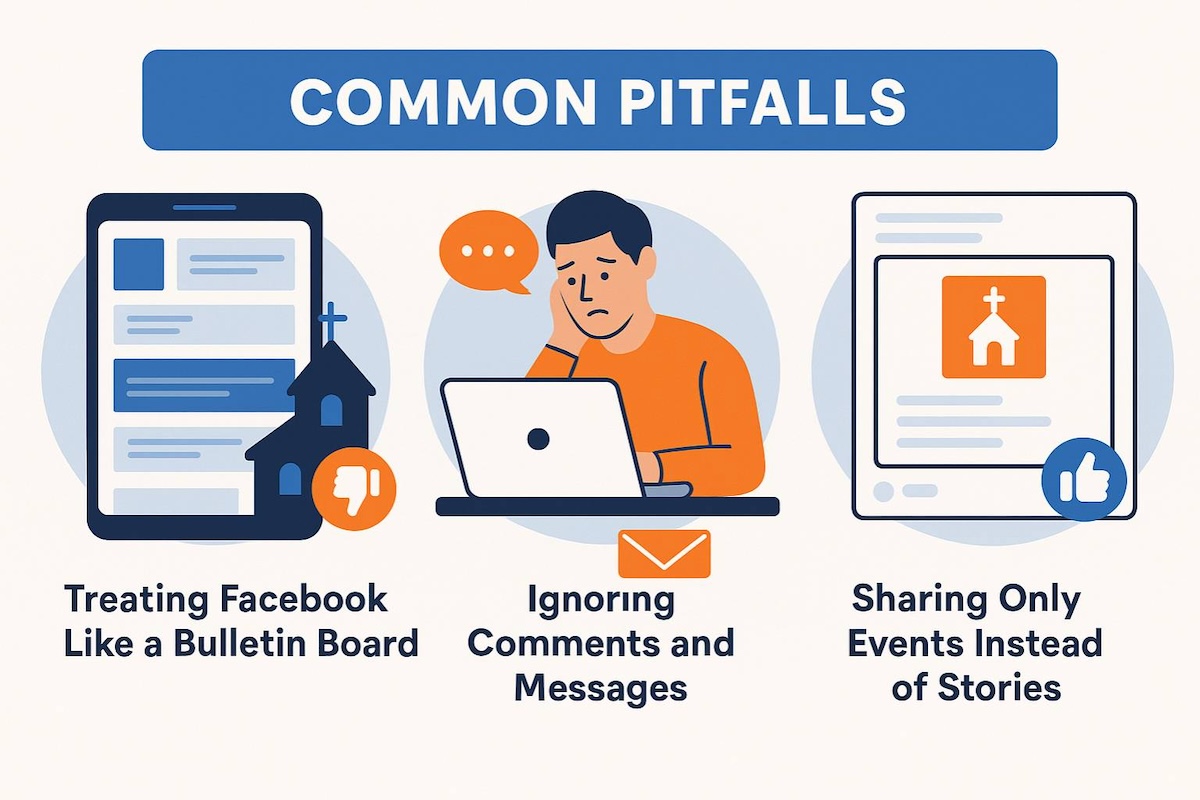
Treating Facebook Like a Bulletin Board
When your page is nothing but announcements and flyers, it quickly begins to feel like clutter in someone’s feed. This one-way communication rarely sparks conversation or connection because it doesn’t invite people into a relationship.
Ignoring Comments and Messages
Every comment or message is an opportunity for ministry, and leaving them unanswered can close the door to connection. Responding personally, even with a short reply, shows your church is listening and genuinely cares.
Sharing Only Events Instead of Stories
Event posts have their place, but people connect most deeply with stories. Testimonies, volunteer highlights, and real-life moments of God at work draw people in and make your church’s online presence relatable and human.
The Goal: Ministry, Not Just Marketing
Facebook is more than a place to post announcements—it’s an extension of your church’s mission field.
Remember, the goal isn’t just to get people to show up on Sunday. It’s to serve your community, meet people where they are, and build relationships that point them toward Jesus.
Church Facebook Page FAQs
Here are some frequently asked questions about churches using Facebook...
How often should a church post on Facebook?
Aim for 3–5 times per week. Consistency matters more than volume.
What type of content gets the most engagement for churches?
Personal stories, questions, prayer opportunities, and community highlights consistently outperform event flyers.
Is paid advertising necessary for ministry impact on Facebook?
No, but it can help extend your reach for events. Organic connection, however, should always come first.