The Importance of Ascension Day: Why It Matters for Protestant Christians

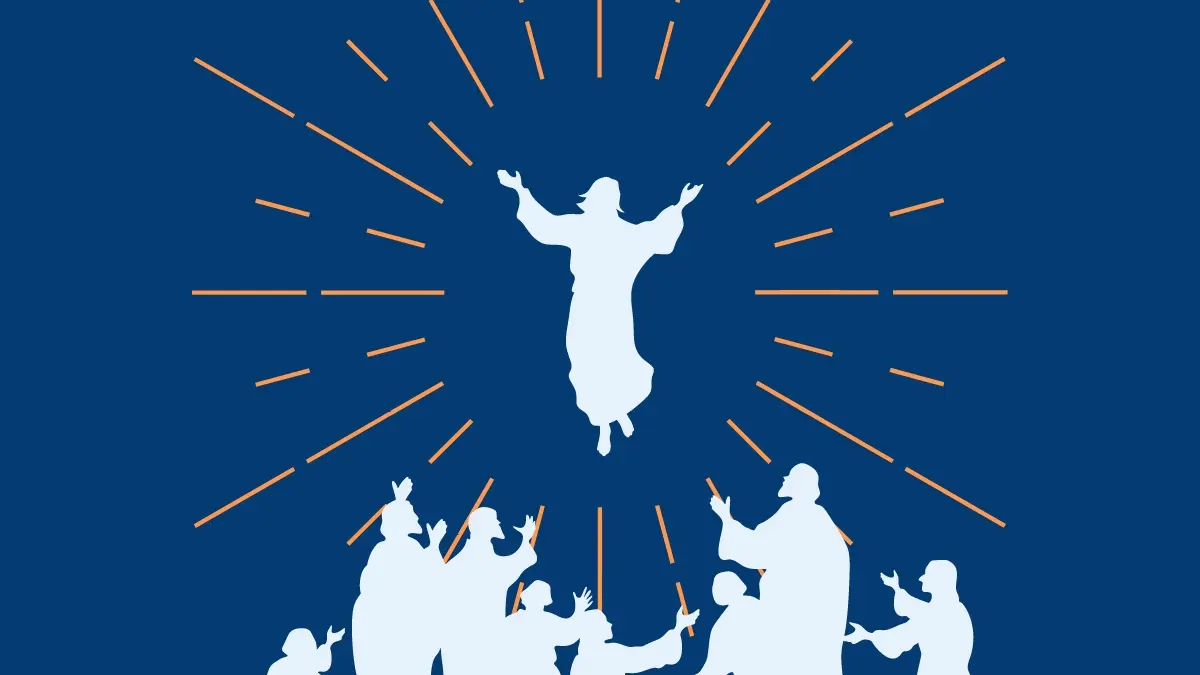
Ascension Day, sometimes called Ascension Thursday or Holy Thursday, is a feast day observed by Christians all over the world to observe the day that Jesus Christ ascended to heaven 40 days after Easter. In some countries, it is even a public holiday!
The Feast of Ascension appears in writings by Eusebius from the 4th Century, claiming Emperor Constantine discovered the location of Christ's ascension and worshiped there. It is mentioned in Saint Augustine's sermons and the writings of other Church Fathers in the 5th Century, stating that observance originated in the Apostolic period. It has been celebrated by Christians for several centuries.
In this post, we'll cover what Christ's ascension means, the importance of celebrating Ascension Day for all believers, as well as share ideas for Protestant churches who are new to observing this feast day.
The significance of Christ's ascension
The moment of Jesus ascending into heaven 40 days after Easter is described in several places in the New Testament. But the New Testament isn't the only place in Scripture you'll encounter ascension!
Did the Old Testament Predict the Ascension?
When God brought the Hebrew slaves out of Egypt and to the foot of Mount Sinai, we see Moses and other tribal elders ascending the mountain to be with God.
Both 2 Samuel 6 and 1 Chronicles 13-16 document King David bringing the ark of the covenant up to Jerusalem with great celebration. It was during this time the Enthronement Psalms were written, portraying the enthronement of Yahweh. In Psalm 110, it is foreshadowed that a ruler will be seated at God's right hand, judging the nations.
Also, the prophet Elijah is taken up to heaven before death. This mysterious event, when viewed through the lens of the New Testament, acts as a precursor to Jesus's ascension.
The Old Testament does not offer overt inferences or direct claims about the ascension of the coming Messiah. However, ascension is a well-established motif in the Hebrew scriptures, giving us hints along the way to Christ's ascension.

The Ascension of Jesus in the New Testament
The Ascension was written about by two of Jesus's disciples: Mark and Luke. Mark 16:19 is very direct, while Luke takes greater care to describe the moment. Luke writes about the moment at the end of the Gospel of Luke, then goes into even greater detail at the beginning of the book of Acts.
Other disciples also wrote about the moment in letters...
1 Peter 3:21-22 talks of Jesus's resurrection and ascension to God's right hand.
Paul writes in Ephesians 1:18-23 that Jesus wasn't just taken up to heaven, but God placed Him at His right hand. Jesus now rules over all power and authority and is the head of the church today. Christ's ascension marks the moment he became the supreme authority over all creation, especially over the church.
Also, Hebrews 9-10 rely on Christ's ascension as the culmination of what Christ accomplished, affirming that he is the true Messiah.
What is the Importance of the Ascension of Jesus?
The Ascension signals that Jesus' earthly work is finished. His redemptive work is done, now his intercessory work begins. As Oswald Chambers once wrote, "At His Ascension, our Lord entered heaven, and He keeps the door open for humanity to enter."
The significance of the ascension is that it is the moment Jesus's role as our mediator began in its fullness. Though we see him pray to God on mankind's behalf during his time on Earth, the ascension marks the moment he was placed at God's right hand to intercede for us until the moment of his return.
The importance of celebrating Ascension Day in Protestant churches
Ascension Day is observed largely by the Catholic and Eastern Orthodox churches, as well as the Orthodox branches of Protestantism, like the Lutheran Church, Anglican Church, and Episcopal Church.
However, many Protestants don't celebrate the Feast of the Ascension or have any special observance for the day.
Why is the Ascension not important to some Christians?
Most Protestant churches and denominations do not hold a special service for Ascension Day. There are a few potential reasons why:
- When Protestants broke away from the Catholic Church during the Reformation in the 16th Century, many did more than just reject the authority of the Pope but went so far as to distance themselves from everything to do with the Catholic Church, including the liturgical calendar. John Calvin notably wanted to banish the observance of all liturgical feast days, arguing we should observe the death, burial, and resurrection of our Lord every Sunday.
- Since the Enlightenment, our understanding of the universe has increased and we no longer hold to the Geocentric model that places Earth at the center of creation. Therefore, artistic depictions of Jesus ascending vertically through a universe 94 billion light years across have fallen out of favor. This has left us with very little iconography to influence our liturgy.
- Christmas and Easter get top billing, even in secular culture. Santa Claus and the Easter Bunny give an unbelieving world something to cling to apart from the religious origins of these events, while the Ascension has no such alternative mascot. Because advertisers don't put Ascension Day in front of us to try to sell something, many believers don't give it much thought either.
- The most likely reason: Like me, many believers in Protestant churches do not observe the Feast of Ascension because we were not raised in a church that did, so it is not a part of our liturgical expression today. We simply were never shown the importance of this holiday.
Reasons Protestants should celebrate Ascension Day
The Feast of the Ascension is a time to reflect on Christ's headship over our lives, the church, and the world around us. In a world filled with distractions (see the 3rd bullet point re: Christmas & Easter above), we need a regular reminder to fix our eyes on who is really in charge.
Protestantism still carries within it the instinct to protest against the Catholic Church. But that doesn't mean we must rid ourselves of established traditions and practices that have helped countless Christians across the centuries. Besides, the Catholic Church did not invent the practice of observing annual public holidays, that honor goes to the ancient Hebrews.
Celebrating the Feast of Ascension is an opportunity to connect with believers across time and reflect more deeply on the headship of Christ.
Ideas for Ascension Day celebrations for Protestant churches
The Feast of Ascension is a three-day event, culminating on Thursday in a large feast and a procession into the church complete with torches/candles and banners declaring Jesus Christ as Lord. In the past, this procession was a large parade that carried through town to the church!
This procession is meant to symbolize Jesus climbing the Mount of Olives with his disciples, then ascending to the throne of heaven.
How Protestants can celebrate Ascension
For Protestant churches who have never observed the Feast of Ascension before, holding a three-day event during the middle of the week is a big task. However, there are other ways to join the global church for this Christian holiday without breaking your budget or stretching your volunteers thin.
- Make your sermon a reflection on the Ascension of Christ. Your worship leader could also choose songs for the week that celebrate the ascension.
- Do you have members that are artistically inclined? Ask them to make art, no matter the medium, that illustrates Christ's ascension. Display that art in the sanctuary and foyer.
- Ascension Day is also called the Feast of Ascension for a reason: Food is involved! Traditionally, believers eat fowl (chicken, quail, duck, etc) because Christ "flew" to heaven. If your church has small groups, ask the leaders to host a meal that week with a bird as the main course.
- Ready to go big? Get as many members as you can to create a procession that leads from the front door of the church through the foyer and into the sanctuary up to the pulpit/stage, all set to triumphant music played by the worship team. Make your celebration loud with shouts of joy!
- Though the Feast of Ascension is typically celebrated in the middle of the week, if doing any of the above during the week is not an option, do them at the church service before or after Ascension Day. The United Methodist Church typically takes this approach.
The best thing to do is meet with believers and church leaders from churches that have always celebrated the day and ask them what they do, then use their ideas as inspiration for what your church can do.
FAQs about Ascension Day
Below are commonly asked questions about Ascension Day. If you're new to the practice of celebrating the day, this is a good place to start.
What is Ascension Day?
Ascension Day, also called the Feast of Ascension, is a Christian holy day where believers around the world celebrate the ascension of Christ into heaven 40 days after his resurrection.
When is Ascension Day celebrated?
In Western churches, Ascension Day is celebrated 40 days after Easter. Since Easter day is calculated based on a lunisolar calendar in conjunction with the Gregorian calendar, the exact day of Ascension also falls on a different day each year. Thus, it is referred to as a "moveable feast."
In 2023, Ascension Day falls on May 18 for Catholic and Protestant believers.
Eastern Orthodox churches use the Julian calendar, so they celebrate on a different day. Orthodox Ascension Day occurs on the first Thursday of June each year. In 2023, Ascension Day is celebrated on June 1.
How is Ascension Day celebrated?
Some Christians spend the Tuesday and Wednesday before Ascension Day in prayer and fasting. These are called the Rogation Days and include a Litany of the Saints.
On Ascension Thursday, a parade is held through the center of town leading into the church to mimic Christ entering the throne room of heaven and being seated at God's right hand. There is also a feast held that day, with a cooked fowl as the main course.

It is considered a public holiday in some countries, including Indonesia, Vanuatu, Norway, Sweden, Finland, the Netherlands, Belgium, Luxembourg, Germany, France, and Austria.
Why do Protestant churches sometimes overlook Ascension Day?
Protestantism is still protesting against Catholicism! Jokes aside, Protestants are still squeamish about doing anything associated with the Catholic Church. In an effort to distinguish themselves from their papist brothers and sisters, Protestants will forsake practices that are closely tied to Catholicism.
What is the significance of Christ's ascension for Christian faith and practice?
Making Ascension Day a fixture in our annual calendar forces us not to take for granted Christ's headship over us and all creating. Like Valentine's Day reminding us to treat our spouse with extra care and attention, Ascension Day reminds us of who we serve and who is in control.
Put Jesus Christ's Ascension on your calendar
Ascension Thursday is not a mere footnote to our theology or practice. As N. T. Wright states in Suprised by Hope, "The ascension demands that we think differently about how the whole cosmos is, so to speak, put together and that we also think differently about the church and about salvation." Protestant believers would do well to consider ways to observe the significance of the day and join the rest of the global church as they follow the Christian calendar.
Christian Churches around the world are getting ready for the Feast of Ascension. If you have never celebrated Ascension Day before, this is the year to begin!